Choosing among China’s best Electric Golf Trolley manufacturers takes more than comparing prices. Buyers should examine motor control, battery range, frame durability, spare-part access, and actual course performance. Small details matter: a trolley should climb a damp slope steadily, turn without jerking, and fold neatly into a car trunk.
Market context helps, but it needs careful reading. The National Golf Foundation’s 2024 participation report counted 26.6 million on-course golfers in the United States during 2023. That figure signals a substantial golfing audience, not direct proof of electric-trolley sales. The R&A’s Global Golf Participation Report also tracks participation across markets, offering useful context for suppliers serving international golfers. Neither report ranks Chinese manufacturers. Buyers should treat broad market figures as context, not a substitute for factory audits or product testing.
There is a health angle, too. Sports scientist Dr. Neil Wolkodoff led research comparing the physical demands of carrying clubs, using a push cart, and riding. His findings indicate that using a cart can still involve meaningful exertion; an electric trolley supports walking without removing every physical demand. That is a useful distinction. It is not a promise of a specific health benefit for every golfer.
A practical test is simple: ask suppliers for independently verifiable battery specifications, warranty terms, and replacement-part details. Then test the trolley on uneven ground. Some product claims look impressive on paper. Real turf is less forgiving.
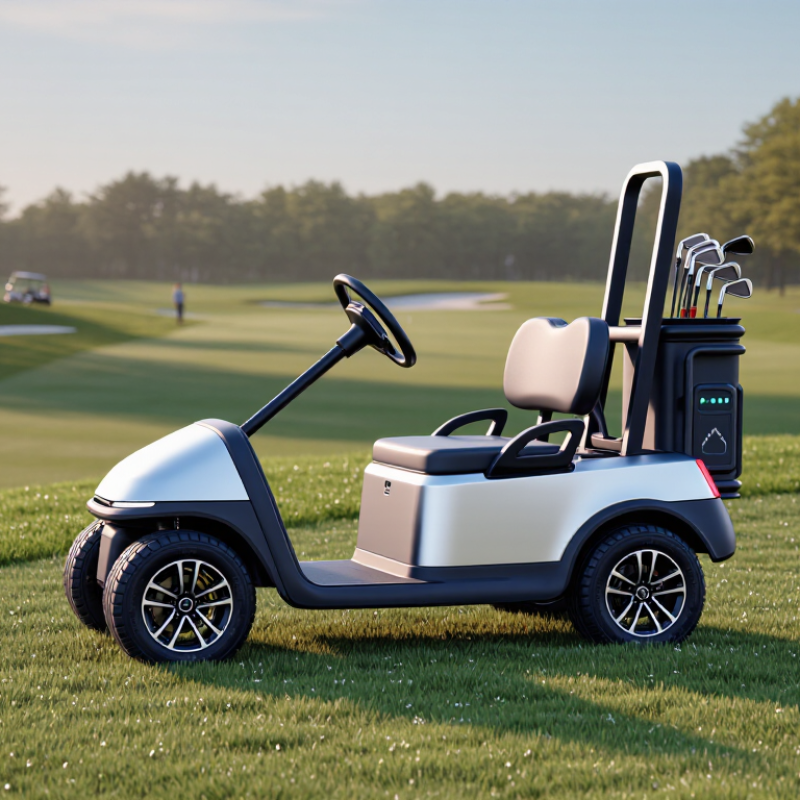
Understanding Electric Golf Trolleys and China’s Manufacturing Landscape
An electric golf trolley combines a motor, battery, controller, frame, and braking system to move a golf bag across varied terrain. On a course, small details matter: wheel grip on damp grass, stable steering near slopes, and enough battery capacity for a full round. China’s manufacturing landscape includes suppliers focused on metal fabrication, electronics, battery assembly, and finished equipment. Some manufacturers handle several stages in-house; others rely on specialist partners, so capabilities can differ.
Tips: Ask for clear specifications, including battery capacity, frame material, load rating, and tested range. Request inspection records and sample units when possible. Check how the trolley performs on wet turf and uneven paths, not just a smooth factory floor. These checks take time, but brochures cannot reveal every weakness.
A reliable supplier should explain its quality checks and how it handles component changes between production batches. Compare written test results with the exact model being quoted. Manufacturing scale can help with consistency, yet it does not guarantee careful assembly. I would also verify spare-part availability before placing a large order. That detail is easy to overlook, and sometimes it is.
How to Evaluate Chinese Electric Golf Trolley Manufacturers
China Best Electric Golf Trolley Manufacturers?
How to Evaluate Chinese Electric Golf Trolley Manufacturers
Choosing a Chinese electric golf trolley manufacturer requires more than comparing quoted prices. Evaluate the engineering process, test records, and support after delivery. Ask how each trolley performs with a full golf bag on wet grass and uneven slopes. Small details matter. Check tire grip, brake response, handle adjustment, and whether the frame rattles over a path joint. Request battery capacity data, charging guidance, and written storage instructions. A polished catalog is not evidence.
A capable manufacturer should explain material checks, assembly inspections, and final testing clearly. Ask to review recent inspection records and test a sample unit on a short incline. Notice stopping distance. Inspect cable routing, connector fit, and access to replaceable parts. Confirm lead times, spare-part availability, warranty coverage, and response expectations in writing. If answers stay vague, treat that as a risk, not a minor inconvenience.
Compare samples using the same bag weight and route; otherwise, impressions can mislead. Ask how performance changes as battery charge falls, and whether the trolley stays controllable on cross-slopes. No checklist is perfect. A factory may provide strong records yet overlook a small usability issue, such as a stiff folding latch. Keep notes, and let real course use challenge your first impression.
Leading Manufacturers and Their Product Specialties
Electric golf trolley manufacturers often focus on distinct needs: compact folding, long battery range, or steady performance on uneven ground. A folding-focused maker may prioritize a low frame and quick-release joints, so the trolley fits beside a golf bag in a car boot. Battery specialists tend to emphasize usable capacity and clear charge indicators. On a long course, that small display can matter more than a headline range figure. Terrain-focused designs may use wider wheels and stronger traction to handle damp grass, slopes, and loose paths. Not glamorous. Still useful.
Comparing manufacturers means checking how their specialties match real playing conditions. Look for the trolley’s weight, folded dimensions, battery type, and stated load capacity. Ask whether the handle adjusts comfortably and whether controls remain easy to reach while walking. A short test on a sloped path can reveal steering effort that product photos cannot. Specifications are useful, but they do not describe every course or player. I would be cautious about treating a claimed range as a guarantee; hills, bag weight, and repeated stops can change performance. Even a well-made model may feel awkward with a particular bag. That part is easy to overlook.
China Best Electric Golf Trolley Manufacturers? - Leading Manufacturers and Their Product Specialties
Comparison of common product-specialty categories offered by manufacturers in China. Profiles are anonymized and describe market offerings, not specific companies or a verified ranking; configurations vary by model.
| Manufacturer Specialty |
Typical Product Format |
Common Features |
Typical Buyer or Use Case |
Customization Considerations |
| Compact folding trolleys |
Usually a three-wheel design with a folding frame |
Space-saving folded form, electric drive, speed control, and a battery-powered system |
Golfers who prioritize storage and transport in a car trunk |
Folded dimensions, frame materials, handle layout, battery type, and accessory fit |
| Remote-control models |
Three- or four-wheel powered trolley with a handheld remote |
Remote steering and speed commands; some models also provide manual control |
Users seeking reduced hands-on steering during a round |
Remote-control functions, receiver design, fail-safe behavior, and local radio requirements |
| Four-wheel stability-focused models |
Four-wheel chassis, sometimes with a swiveling or adjustable front wheel |
A wider support base and wheel layout designed to help maintain balance on varied terrain |
Golfers who value stability, including on uneven fairways |
Wheel size, track width, steering geometry, frame weight, and folding mechanism |
| Entry-level powered trolleys |
Basic two- or three-wheel electric trolley |
Core powered movement and straightforward speed controls, with fewer electronic features |
Retailers and buyers looking for a simpler feature set |
Battery and charger options, control layout, frame finish, packaging, and compliance needs |
| OEM/ODM-oriented production |
Product configurations developed or assembled to a buyer’s requirements |
Potential options include product appearance, accessories, packaging, and selected component specifications |
Importers, distributors, and private-label sellers |
Confirm tooling ownership, minimum order quantities, sample approval, testing, and after-sales support directly with each supplier |
Specifications and available options are model-dependent. Request current datasheets, battery and charger details, applicable safety documentation, and warranty terms before comparing suppliers.
Comparing Quality, Technology, Customization, and Export Support
Choosing an electric golf trolley manufacturer requires more than comparing catalog photos. Inspect frame joints, wheel alignment, handle stability, and battery compartment seals. Small details matter. Ask for test records covering loaded runs, slopes, and repeated folding. A trolley that moves smoothly on a showroom floor may behave differently on wet grass. Check whether the battery indicator remains readable in bright sunlight, and whether speed settings feel controlled rather than abrupt. Technology should solve practical problems, not merely decorate the handle. I may be giving durability more weight than appearance, but repairs can interrupt a golf course’s daily operations.
Customization is useful when it fits real needs, such as handle height, color, or accessory mounting points. Request a sample and confirm that changes do not affect balance or access to service parts. Even polished samples can hide production inconsistencies. That is worth checking. Export support matters just as much: clarify packaging, spare-part availability, user manuals, charger compatibility, and communication during shipping. Ask who handles technical questions after delivery, and how quickly replacement components can be arranged. A clear written process is reassuring; vague promises are not. Manufacturers may offer impressive options, but some buyers still need to verify details more carefully than expected.
China Electric Golf Trolley Manufacturers: Buyer Evaluation Priorities
Suggested weighting for comparing quality, technology, customization, and export support. These are planning weights—not measured market data or ratings of any manufacturer.
Use these example weights as a starting point and adjust them to match your product requirements, target market, and sourcing priorities.
Choosing the Right Chinese Manufacturer for Your Needs
Choosing the right Chinese electric golf trolley manufacturer starts with your course conditions, not a catalogue photo. Consider slopes, turf, storage space, and the distance users travel in a typical round. A steep path places different demands on the motor and braking system than a flat course. Ask for clear specifications on battery capacity, frame materials, wheel size, and load limits. Small details matter.
Assess the supplier’s engineering and quality processes before discussing a large order. Request a sample and test it on grass, inclines, and uneven paths. Check how easily the trolley folds, whether the handle feels secure, and how long the battery takes to recharge. Ask how defects are recorded and which replacement parts are available. Promises sound easy; written procedures are more useful.
Compare quotations carefully. A low price may exclude packaging, spare parts, or testing, so request an itemised breakdown. Clarify lead times, warranty coverage, communication channels, and how design changes are approved. If possible, arrange a factory review or an independent product inspection. No checklist removes every risk; a sample may not reveal months of wear. That uncertainty deserves honest attention.
FAQS
Review test records, warranty terms, spare-part availability, and written response expectations. A low quote proves little.
Test it with the same golf bag on wet grass and a short incline. Check braking and control.
Look at frame joints, wheel alignment, cable routing, connectors, and battery-compartment seals. Notice any rattling.
Ask for records of loaded runs, slope tests, repeated folding, and final inspections. Recent records are more useful.
Use the same bag weight and route for each sample. Otherwise, impressions can mislead.
Request capacity data, charging guidance, and storage instructions. Ask how performance changes as charge falls.
Not necessarily. Check whether handle or accessory changes affect balance and access to service parts.
Clarify manuals, charger compatibility, shipping communication, and how replacement parts are arranged. Get the process in writing.
No. Check production inspections too. A stiff folding latch can be easy to overlook.
Conclusion
China has become an important source of electric golf equipment, offering buyers a wide range of production capabilities, design options, and export services. An Electric Golf Trolley can differ significantly in frame construction, motor performance, battery capacity, handling, and ease of use, so evaluating manufacturers requires more than comparing prices. Buyers should review product specifications, manufacturing experience, quality-control processes, and the supplier’s ability to communicate clearly and provide dependable support.
Leading manufacturers may specialize in lightweight designs, advanced drive systems, durable materials, or flexible customization. Comparing these strengths can help buyers assess product quality, technology, available configurations, and export support. The right partner depends on the intended market, target users, budget, order volume, and service expectations. By defining these needs in advance and carefully assessing each supplier’s capabilities, buyers can make a more informed choice and build a productive manufacturing relationship.

 XXCART