How to Choose the Best Golf Cart for Your Business?

Time:2026-09-13 Author:Madeline
0%

Choosing the right Golf Cart is a business decision, not a simple equipment purchase. Fleet managers must match vehicle design with terrain, passenger flow, operating hours, and maintenance capacity. A resort may need quiet four-seater carts for guest transfers. A warehouse may require cargo beds, enclosed storage, and stronger torque. Small details matter, especially on steep paths or uneven concrete.

Market research shows why this category deserves careful evaluation. Grand View Research identifies rising demand for electric utility vehicles across resorts, campuses, warehouses, and industrial sites. Its industry analysis also links market growth to lower operating costs and expanding sustainability requirements. Mordor Intelligence reports continued growth in the global golf cart market, supported by tourism, hospitality, and commercial transportation applications. However, published estimates differ by research firm. That variation deserves attention. Market size figures depend on product definitions, regions, and included vehicle types.

Reliable selection should combine published data with direct operating experience. Review battery chemistry, charging time, payload ratings, turning radius, weather protection, and replacement-part availability. Ask suppliers for documented testing and service records. A low purchase price can become expensive when batteries fail during peak guest hours. It can also create avoidable downtime.

Safety and usability should remain central. Operators need clear controls, stable seating, effective braking, and practical visibility. Accessibility requirements must be considered for public-facing businesses. The best Golf Cart is not always the fastest or newest model. It is the one that performs consistently, supports staff, and fits the business’s real daily conditions. Test it onsite. Then challenge your assumptions.
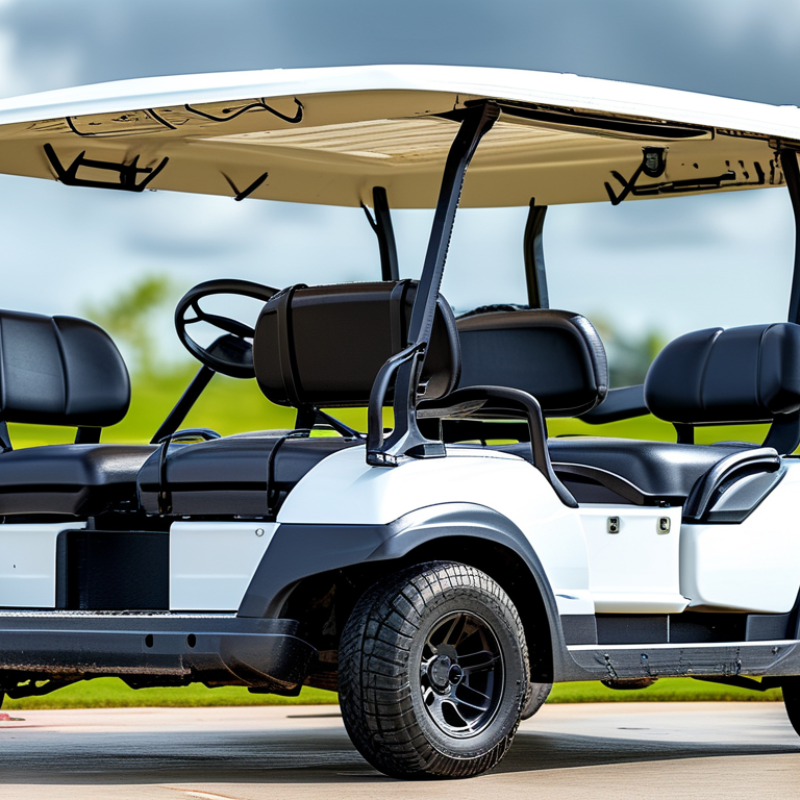
How to Choose the Best Golf Cart for Your Business?

Define Your Business’s Golf Cart Requirements

Before choosing a golf cart, define how your business will use it each day. A resort may need quiet passenger transport, while a warehouse may require steady cargo movement. Count daily riders, estimate cargo weight, and measure the narrowest route. Small details matter.

Consider terrain, weather, storage, and charging access. A cart carrying four people uphill needs different power than one moving tools across flat pavement. Check turning space near doors and loading areas. Review expected operating hours, tire wear, braking performance, and maintenance support. Safety training should match the vehicle’s speed and workplace conditions. Local requirements may also affect where the cart can operate. A perfect checklist rarely exists.

Tips: Observe the busiest route during real working hours. Record delays, steep sections, passenger queues, and battery charging gaps. Speak with drivers and maintenance staff; they often notice problems managers miss. Leave extra capacity for seasonal demand, but avoid buying far more cart than necessary. That mistake is common. Recheck your assumptions after a short trial period, because the first plan may be incomplete.

Compare Golf Cart Types, Power Systems, and Key Features

Choosing the best golf cart for your business starts with the work, not the color or appearance. Passenger carts suit resorts, campuses, and guided tours. Utility carts handle tools, supplies, and maintenance tasks. Shuttle models work better for frequent passenger movement. Four-wheel designs usually provide greater stability on uneven paths. Compact two-seat carts turn more easily in narrow service areas.

Power systems affect noise, operating cost, and daily planning. Electric carts offer quiet operation and fewer routine engine tasks. They fit indoor facilities and noise-sensitive locations. Charging schedules matter. Gas-powered carts can support long shifts without waiting for charging, but they need fuel storage, ventilation, and more mechanical care. Battery choice also deserves attention. Lithium systems may reduce weight and charging time, while lead-acid batteries can cost less initially. I have seen buyers focus on purchase price and overlook replacement planning. That mistake becomes expensive.

Examine payload capacity, braking performance, ground clearance, tire design, and turning radius. Weather protection, headlights, mirrors, reverse alarms, and seat belts improve practical safety. Check the service network and parts availability before ordering. A cart that sits unused during repairs is not economical. No checklist is perfect. Your terrain and staff habits may reveal needs during a trial run.

Tips: Test the cart with its real load. Measure slopes, doorways, and storage spaces. Ask operators to drive it. Their feedback may challenge your original choice. Record charging time, energy use, and maintenance issues for several weeks before expanding the fleet.

How to Choose the Best Golf Cart for Your Business? — Compare Golf Cart Types, Power Systems, and Key Features
Comparison Criteria 2-Seat Utility Cart 4-Seat Personnel Cart 6-Seat Shuttle Cart Enclosed Utility Cart Heavy-Duty Cargo Cart
Cart Type and Business Application
Best suited for Maintenance teams, campuses, resorts, warehouses, and short-distance site transport Hotels, residential communities, event venues, and facility inspections Guest transportation, airports, resorts, campuses, and guided tours Weather-sensitive deliveries, indoor facilities, warehouses, and service operations Landscaping, construction, agriculture, utilities, and material handling
Typical passenger capacity 2 people 4 people 6 people 1–2 people, depending on the cargo layout 1–2 people, depending on the cargo layout
Typical cargo capacity Approximately 200–500 lb (91–227 kg) Approximately 150–400 lb (68–181 kg), depending on rear seating design Approximately 100–300 lb (45–136 kg) Approximately 300–800 lb (136–363 kg) Approximately 500–1,500 lb (227–680 kg)
Typical operating range per charge or fill 15–40 miles (24–64 km) 15–35 miles (24–56 km) 15–30 miles (24–48 km) 15–40 miles (24–64 km) 15–35 miles (24–56 km)
Typical maximum speed 12–20 mph (19–32 km/h) 12–20 mph (19–32 km/h) 12–20 mph (19–32 km/h) 12–20 mph (19–32 km/h) 10–20 mph (16–32 km/h)
Maneuverability Excellent for narrow aisles and compact work areas Good for routine personnel transport Moderate; longer wheelbase requires more turning space Moderate; body dimensions may restrict access Moderate; optimized for load stability rather than tight turning
Terrain suitability Flat surfaces and light inclines; all-terrain tires improve performance Roads, paved paths, and light-duty mixed terrain Paved paths and maintained roads; avoid steep or rough terrain unless specifically equipped Indoor and paved environments; select higher ground clearance for uneven outdoor surfaces Uneven ground, gravel, grass, and job sites when equipped with suitable tires and suspension
Turning radius Typically compact and tight Typically compact to moderate Usually wider because of the longer wheelbase Moderate to wide, depending on body length Moderate to wide, depending on chassis and cargo bed
Weather protection Roof and windshield commonly available; sides often open Roof, windshield, and side curtains commonly available Roof and windshield commonly available; side protection varies High; enclosed body protects operators and cargo Varies; canopy and windshield options are common
Loading and unloading Open rear bed supports quick loading Rear seat may fold or convert into a cargo platform Passenger-focused layout provides limited cargo flexibility Enclosed storage protects goods but may require rear or side access Large flatbed, dump bed, or tailgate designs support frequent material handling
Recommended drivetrain 2-wheel drive for paved areas; 4-wheel drive for slopes or loose surfaces 2-wheel drive for routine passenger transport 2-wheel drive for paved routes; 4-wheel drive for hills or mixed terrain 2-wheel drive for indoor and paved operations 4-wheel drive or a high-torque drivetrain for slopes, loose ground, and heavy loads
Power System Comparison
Electric battery system Quiet operation, zero tailpipe emissions, and low routine maintenance. Requires charging infrastructure and charging time. Range may decrease with heavy loads, cold temperatures, hills, or frequent stop-and-go use.
Lead-acid battery Lower initial purchase cost and widely available service support. Requires regular charging discipline, ventilation during charging, electrolyte checks for flooded types, and eventual battery replacement.
Lithium-ion battery Higher initial cost but generally lighter weight, faster opportunity charging, longer usable cycle life, and reduced routine maintenance. Requires a compatible battery management and charging system.
Gasoline engine Fast refueling and practical for long shifts or remote operations without charging access. Produces exhaust emissions, requires fuel storage and engine maintenance, and is typically noisier than an electric system.
Typical charging or refueling need Electric carts commonly require approximately 6–12 hours for a full charge, depending on battery capacity and charger output. Gasoline carts can usually be refueled in minutes, subject to workplace fuel-safety procedures.
Key Features to Evaluate Before Purchase
Safety equipment Seat belts, mirrors, headlights, brake lights, turn signals, parking brake, horn, windshield, and operator restraint systems should match the site risk assessment and local regulations.
Braking system Mechanical or hydraulic brakes are common. Regenerative braking may reduce wear on electric carts, but it should not replace a properly maintained service brake system.
Suspension and tires Choose smooth-tread tires for paved surfaces and more aggressive tread patterns with increased ground clearance for grass, gravel, mud, or uneven work sites.
Maintenance planning Electric carts generally need tire, brake, steering, suspension, and battery-system inspections. Gasoline carts additionally require engine oil, air filter, spark plug, fuel-system, and exhaust-system service.
Total cost of ownership Compare purchase price, energy or fuel consumption, charging equipment, battery replacement, scheduled maintenance, insurance, downtime, tires, and expected service life—not only the initial price.
Best general selection rule Choose for compactness and daily utility work Choose for balanced passenger capacity and flexibility Choose for frequent group transportation on controlled routes Choose for protected cargo and operator comfort Choose for payload, traction, durability, and demanding terrain
Specifications shown are typical industry ranges for business-use golf carts and utility vehicles. Actual performance varies with vehicle configuration, battery or engine condition, payload, terrain, temperature, tire pressure, driving style, and local operating requirements.

Evaluate Passenger Capacity, Cargo Space, and Operating Range

Choosing a golf cart for business begins with the daily route, not the showroom. Passenger capacity should match real demand, including staff, customers, and occasional visitors. A four-seat vehicle may suit a small resort team. A larger model helps transport groups between buildings. Do not count seats alone. Check legroom, entry height, and the load limit. A crowded cart slows boarding and increases fatigue during long shifts.

Cargo space deserves equal attention. Measure the largest items used each week, such as tool cases, cleaning supplies, crates, or folded barriers. Then compare those measurements with the bed length and usable height. Our first estimate was wrong because we ignored stacked equipment. Leave room for safe loading. Heavy items should sit low and near the center. A secure enclosure can protect supplies from rain, dust, and sudden braking.

Operating range must reflect actual working conditions. Record route distance, hills, stop-and-go traffic, payload, and charging opportunities. A published range is only a reference. Cold weather, heavy loads, and aging batteries can reduce it noticeably. Build a practical reserve, perhaps 20 percent, so one delayed trip does not disrupt operations. Track energy use for two weeks before choosing. The result may challenge your original plan. That is useful. A cart with fewer seats may work better if it carries more cargo and completes the full shift. Ask operators what fails first. Their answers often reveal the real requirement.

Assess Safety, Maintenance, Warranty, and Total Ownership Costs

Choosing a golf cart for business starts with risk, not color or top speed. In 2023, the U.S. Bureau of Labor Statistics recorded 1,942 fatal workplace injuries from transportation incidents. They represented 36.8% of all fatal work injuries. That figure covers many vehicle types, but it deserves attention. Inspect seat belts, brakes, steering, lights, mirrors, reverse alarms, and pedestrian visibility. Ask whether the cart follows ANSI/ITSDF B56.8 guidance and your site’s traffic plan. Test it on slopes, wet surfaces, ramps, and crowded loading areas. A quiet cart can still create blind-corner danger.

Tips: Record battery age, charging time, tire wear, and repair hours during a two-week trial. Compare lead-acid and lithium battery schedules. The U.S. Department of Energy’s Alternative Fuels Data Center notes that electric drivetrains generally need less routine maintenance. They contain fewer moving parts. That does not mean zero maintenance. Chargers, batteries, brakes, suspension, and connectors still fail. Keep a written inspection log. It feels slow, until one missed defect stops a shift.

Warranty language needs close reading. Check coverage for batteries, chargers, labor, corrosion, and commercial use. Ask who pays transport and downtime. Calculate five-year ownership costs, including financing, electricity, charging equipment, service, tires, battery replacement, training, insurance, and resale. The honest number may exceed the invoice. Price one difficult scenario, too: a cart unavailable during peak season. Supplier response time should be measured, not merely promised.

Select the Best Golf Cart Supplier for Your Business Needs

Choosing the right golf cart supplier can shape daily operating costs, staff productivity, and customer satisfaction. Allied Market Research valued the global golf cart market at approximately $1.6 billion in 2021. It also projects the market to reach about $2.3 billion by 2031. That growth increases supplier choice, but not supplier quality.

Start with your business conditions. A resort needs quiet vehicles, comfortable seating, and dependable range. A warehouse may require stronger payload capacity, better ground clearance, and simple charging access. Ask suppliers for battery specifications, expected charging cycles, warranty limits, and replacement-part availability. Request service response times in writing. A low purchase price means little when one vehicle waits weeks for repair.

Check the supplier’s technical support, training, and delivery record. Review references from businesses with similar terrain and usage hours. Then arrange a practical trial. Test braking on slopes, turning in narrow lanes, and battery performance during a full shift. Grand View Research identifies fleet and commercial applications as important growth areas, making after-sales support increasingly valuable. No scorecard is perfect. Weather, driver habits, and uneven routes can change results. A small pilot may reveal weaknesses that a polished sales presentation hides. Select the supplier that explains limitations clearly, not the one promising everything.

FAQS

How should passenger capacity be chosen for business use?

Match seats to daily demand, including staff, customers, and occasional visitors. A four-seat vehicle may suit a small resort team. Check legroom, entry height, and the load limit. A crowded cart slows boarding.

What should be measured before selecting cargo space?

Measure the largest weekly items, such as tool cases, crates, and folded barriers. Compare their dimensions with bed length and usable height. Leave room for secure loading. Our first estimate was wrong because stacked equipment was ignored.

How can operating range be estimated realistically?

Record route distance, hills, stops, payload, and charging opportunities. Published range is only a reference. Cold weather and aging batteries reduce it noticeably. Keep perhaps 20 percent reserve.

Is a smaller passenger cart sometimes better?

Yes, if it carries necessary cargo and completes the full shift. Fewer seats can improve practicality. Ask operators what fails first. Their answers may challenge the original plan.

Which safety features deserve inspection?

Inspect seat belts, brakes, steering, lights, mirrors, and reverse alarms. Check pedestrian visibility around blind corners. Test slopes, wet surfaces, ramps, and crowded loading areas. Quiet does not mean safe.

What maintenance should be tracked during a trial?

Record battery age, charging time, tire wear, and repair hours for two weeks. Keep a written inspection log. Chargers, brakes, suspension, and connectors still need attention. Zero maintenance is a myth.

What warranty details matter for commercial use?

Check batteries, chargers, labor, corrosion, and commercial-use coverage. Ask who pays transport and downtime. A warranty can sound generous. Read the exclusions carefully.

How should total ownership cost be calculated?

Include financing, electricity, charging equipment, service, tires, battery replacement, training, insurance, and resale. Also price one peak-season breakdown. The invoice is not the whole cost. Supplier response time should be measured, not promised.

Conclusion

Choosing the best Golf Cart for your business starts with understanding how and where it will be used. Consider the distance it must travel, terrain, weather conditions, passenger requirements, cargo needs, and frequency of daily operation. Compare electric and fuel-powered options, focusing on performance, charging or refueling convenience, operating range, speed, durability, and useful features such as storage, lighting, weather protection, and easy-access controls. A clear understanding of your work environment will help narrow down the most suitable configuration.

It is also important to evaluate passenger capacity, cargo space, safety equipment, maintenance requirements, warranty coverage, and total ownership costs rather than focusing only on the initial purchase price. Reliable servicing, accessible replacement parts, and responsive technical support can greatly influence long-term value. Finally, select a supplier that can provide dependable products, customization options, transparent pricing, staff guidance, and continued after-sales support. The right Golf Cart should improve daily efficiency, remain practical under demanding conditions, and deliver consistent value throughout its working life.


Madeline

Madeline

Madeline is a dedicated marketing professional with a wealth of expertise in our company's core offerings. With a keen understanding of the industry, she brings a unique perspective to her role, consistently delivering high-quality content that highlights the superior aspects of our products. As......