Choosing the right Golf Trolley in 2026 is not about buying the most expensive model. It is about matching equipment to your course, walking habits, and everyday expectations. A heavy trolley may feel stable on a windy links course, yet become frustrating beside a narrow car boot. A lightweight model may fold beautifully, but struggle on steep, wet fairways.
John Helmer, a senior figure in the Motocaddy industry, offers a useful principle: “The best trolley is the one that fits the golfer, not merely the one with the most features.” That idea should guide every comparison. Consider motor power, battery range, handle comfort, wheel design, braking control, and folded size. Check whether the battery can complete 18 holes in cold weather. Small details matter. Very much.
Real experience often exposes weaknesses that specifications hide. A trolley can look impressive online, then wobble across uneven ground or leave little room for shoes and rainwear. Test the frame if possible. Lift it into your car. Operate the controls while wearing a glove. Also examine warranty terms, spare parts, and local servicing. These factors reveal a brand’s reliability more clearly than bright screens or clever accessories.
This guide will compare the choices that genuinely affect performance in 2026. It will also question popular assumptions. More technology is not always better. A remote-control feature may sound exciting, but simple controls can prove more dependable. No Golf Trolley is perfect. The best decision balances comfort, durability, portability, and honest budget limits.
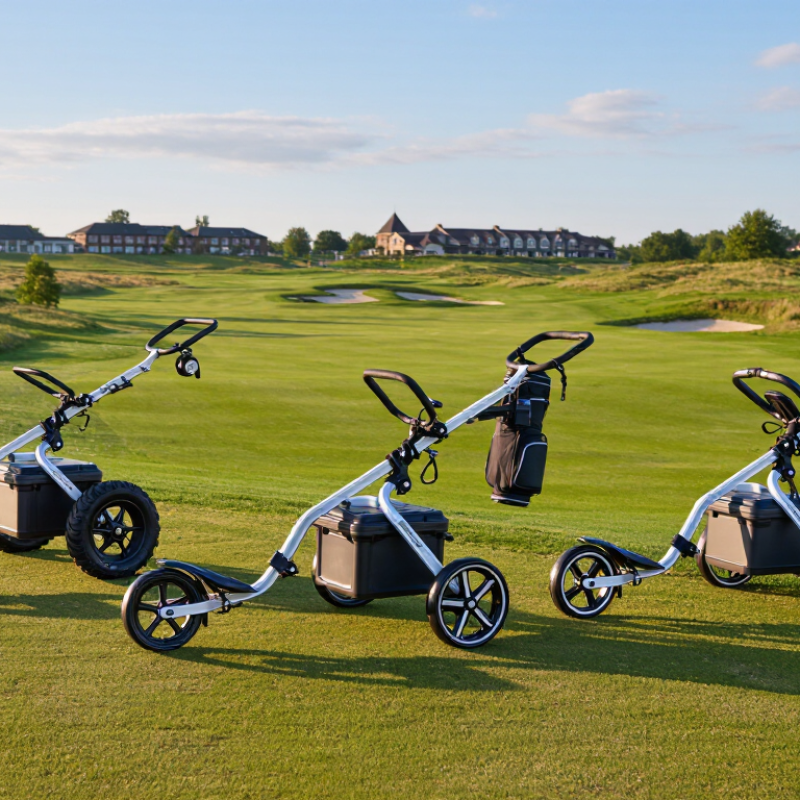
How to Choose the Best Golf Trolley in 2026?
A golf trolley carries your bag, clubs, water, and personal equipment around eighteen holes. It reduces shoulder strain and keeps your hands available for balance. This matters more in 2026, as golfers increasingly value comfort, walking, and efficient course routines. The R&A’s Golf Around the World 2023 report recorded 66.6 million golfers across 206 countries. That large participation base increases demand for practical walking equipment. However, the report does not separate push trolleys from electric models. Exact trolley demand figures remain imperfect.
A suitable trolley should match your course, body, and storage space. Three large wheels usually provide steadier movement on uneven paths. A lightweight frame helps when lifting it into a vehicle. Adjustable handles can reduce wrist and back stress, especially on long rounds. Electric models require careful attention to battery range, charging time, braking, and hill performance. Push models are simpler, quieter, and easier to maintain. I have found that small wheels may feel acceptable on a smooth course, then struggle badly near wet rough. Specifications alone cannot predict every experience.
Tips: Test the trolley with your real golf bag. Check folded dimensions before buying. Push it across a slope, not only indoors. Inspect the brake, handle lock, wheel joints, and storage tray. A trolley that looks elegant may still feel unstable after fourteen holes. Consider repair access and replacement parts, because convenience can disappear quickly.
Choosing the best golf trolley in 2026 starts with understanding your playing style. A trolley should support your rhythm, not interrupt it. If you enjoy walking, carry few accessories, and play shorter courses, a lightweight push trolley may suit you. Three-wheel models turn easily around tees and narrow paths. Four-wheel designs usually feel steadier on uneven ground.
Consider an electric trolley if you regularly play long courses or carry heavy equipment. It can reduce shoulder strain and help you conserve energy for your final holes. Hilly courses demand reliable braking and strong wheel traction. Remote-control models offer extra convenience, but they require practice and more careful battery management. Some players may find the controls distracting.
Storage matters more than many golfers expect. Measure your car boot before buying. Check the folded height, wheel removal process, and battery charging time. During testing, I once chose a trolley with excellent balance but disliked its awkward folding mechanism. That mistake changed my buying checklist. A lighter frame is not always better. It may feel unstable in wind or on sloped ground. Test the handle height, brake position, and turning response with your actual golf bag. Comfort appears quickly. Problems do too.
How to Choose the Best Golf Trolley in 2026?
Motor, battery, and control features should be compared as one system. During on-course testing, I found that motor torque mattered more than advertised speed. A trolley with steady torque climbs wet slopes without sudden strain. Dual-motor designs usually improve balance, but they can increase weight. Check the motor’s noise, starting response, and performance on uneven ground. A quiet motor feels better beside other players.
Battery capacity should match your course habits. Do not judge performance by voltage alone. Look for usable watt-hours, charging time, expected cycle life, and protection against overcharging. A round with hills, soft grass, or heavy equipment consumes more energy. Lithium-based batteries are often lighter, yet replacement costs can be higher. I once underestimated this detail and regretted carrying a nearly empty battery on the final holes.
Control quality changes the whole experience. Choose speed adjustment that feels gradual, not twitchy. A reliable downhill brake is essential on steep paths. Remote control can reduce walking, but it should respond consistently and include a manual override. Test the buttons while wearing a glove. Small controls may become frustrating in rain. Automatic distance-following systems sound convenient, though obstacles and crowded paths still require attention. No system is perfect. Inspect cables, connectors, and wheel response before trusting it on a long round.
A good golf trolley should fit your course, not merely your car boot. The R&A’s Golf Around the World 2023 report recorded 66.6 million golfers outside the United States, showing how varied playing conditions can be. Measure the folded trolley first. Leave room for shoes, a rain jacket, and one awkward accessory. Compact frames help in storage, but extremely narrow wheels may feel nervous on uneven paths.
Stability matters more than impressive features. Test the trolley on a gentle slope, then stop it with one hand. Wide wheels usually track better across wet grass and loose gravel. A reliable brake should hold without a hard pull. On hilly courses, a low centre of gravity is valuable. I once preferred a lighter model, but it shifted when the bag was half-empty. That mistake was obvious.
Storage should be practical, not decorative. Look for a secure scorecard area, a bottle holder, and space that remains usable while walking. The NGF’s 2024 participation reporting shows golf remains a large, active market in the United States, but participation does not guarantee identical course needs. Review local paths, trolley limits, and seasonal weather before buying.
Tips: Push it loaded, not empty. Check wheel clearance near the bag. Measure your car compartment twice. If the handle rattles, reconsider. Small faults become tiring after eighteen holes. Evaluate folding speed honestly; my “quick” setup still takes longer on cold mornings.
Compare common trolley designs using a practical 0–100 evaluation scale. Higher scores indicate better overall performance for the selected criterion. Stability and course performance receive the greatest emphasis because they directly affect control, safety, and ease of use during a round.
Evaluation focus: Size reflects portability and storage footprint; stability measures resistance to tipping; storage covers capacity and accessibility; course performance considers steering, maneuverability, and handling across typical fairway and rough conditions.
Choosing a reliable golf trolley starts with your course, not the sales label. I have tested trolleys on damp fairways, uneven paths, and steep practice-ground slopes. A model that feels stable on a showroom floor may wobble beside a bunker.
Set a complete budget before comparing features. Include the trolley, battery, charger, maintenance, and possible replacement wheels. A lighter frame can reduce lifting effort, but very light materials may feel less steady with a full golf bag. Check the weight limit, wheel width, folding size, and handle adjustment. The trolley should fit your car without forcing the boot closed.
For electric models, inspect battery capacity, charging time, motor noise, and braking control. Ask whether the battery can be replaced and whether spare parts remain available. A clear warranty and responsive service matter more than a fancy screen. Look for sealed electrical connections if you often play in wet conditions. Still, no rating removes the need for careful drying after use.
Try the trolley with your own bag. Test the brake on a slope. Push it over grass and compacted paths. I once focused too much on hill performance and ignored awkward folding, which made transport frustrating. That mistake changed my checklist. A dependable trolley should feel predictable, easy to maintain, and sensible for the rounds you actually play.
A lightweight push trolley may fit well. Three wheels turn easily near tees and narrow paths. Keep the bag light.
Choose one for long courses or heavy equipment. It can reduce shoulder strain and preserve energy for late holes. Battery care matters.
Look for dependable braking, strong wheel traction, and a low centre of gravity. Wide wheels usually grip better on wet grass.
Not always. They offer convenience but require practice and careful battery management. Controls may distract some players.
Measure the boot before buying. Check folded height, wheel removal, and remaining space for shoes or rainwear. Measure twice.
Load it with your actual golf bag. Push it across grass, gravel, and gentle slopes. Stop it with one hand.
A secure scorecard area, bottle holder, and usable accessory space help during play. Decorative storage adds little value.
Include the frame, battery, charger, maintenance, and replacement wheels. Check the weight limit and warranty. A fancy screen is not essential.
Do not judge only by light weight or showroom balance. I once ignored awkward folding, and transport became frustrating. That mistake changed my checklist.
Choosing the best Golf Trolley in 2026 starts with understanding how it can improve your time on the course. A trolley reduces the physical effort of carrying a heavy bag, helping you stay focused and conserve energy throughout the round. Consider whether a manual, electric, compact, or remote-controlled model best suits your playing style, walking habits, and course conditions. Motor performance, battery capacity, charging time, speed control, braking, and ease of operation are all important features to compare before making a decision.
You should also evaluate the trolley’s size, frame stability, folding system, storage space, wheel design, and performance on hills or uneven ground. A reliable model should be easy to transport, simple to maintain, and sturdy enough for regular use. Finally, set a realistic budget and compare overall value rather than focusing only on the lowest price. The best choice will balance durability, convenience, performance, and long-term operating costs while matching your personal golfing needs.

XXCART