Finding reliable Golf Cart Manufacturers worldwide requires more than comparing prices or browsing attractive product photos. A dependable supplier must show consistent engineering, transparent communication, and measurable after-sales support. Mark Wagner, a former Club Car executive, captures this concern clearly: “A golf cart is only as reliable as the support behind it.”
A serious evaluation should begin with factory evidence. Ask for production photographs, quality-control procedures, testing records, and export experience. Verify whether the manufacturer builds electric, lithium-battery, or gasoline models in-house. Some suppliers assemble imported components without explaining the process. That is not automatically unacceptable, but it deserves careful questioning.
Look closely at the details. Can the supplier provide battery specifications, charger compatibility, motor ratings, and braking data? Are replacement parts available in your destination market? A strong warranty means little if claims require expensive international shipping. Request references from distributors operating in climates similar to yours. Heat, humidity, steep roads, and salt air can expose weaknesses quickly.
Certifications also matter, although they should not replace independent verification. Check documentation, inspect sample units, and consider a third-party factory audit. Video calls help, but they cannot reveal every production problem. That limitation is easy to overlook.
Reliable Golf Cart Manufacturers welcome specific questions and explain weaknesses honestly. Be cautious when every answer sounds perfect. Delivery schedules may change, batteries may age during storage, and specifications can vary between batches. A careful buyer accepts some uncertainty, then reduces it through written agreements, pre-shipment inspections, and realistic testing. Reliability is not a slogan. It is a process you can examine.
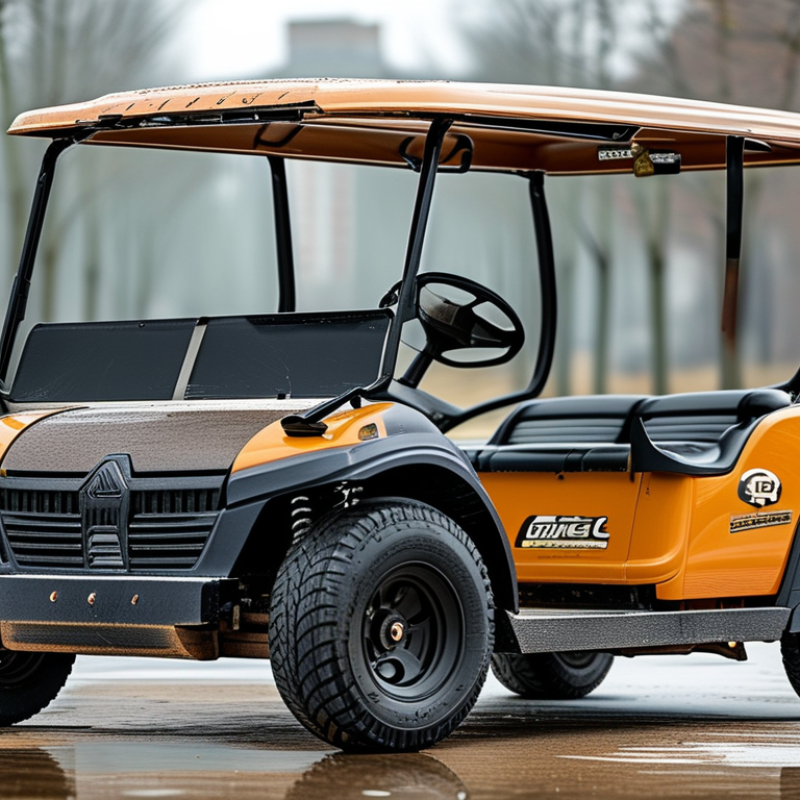
A reliable search begins by defining “golf cart” correctly. ANSI/ILTVA Z130.1 focuses on golf-car safety and performance, including braking, steering, stability, electrical protection, and operator controls. It is a useful engineering baseline, not a universal road-approval certificate. Confirm the current edition and request test records from the manufacturer.
FMVSS 500 FMVSS 500 is different. The U.S. NHTSA standard covers low-speed vehicles, generally designed for speeds above 20 mph but not exceeding 25 mph. It requires equipment such as lamps, mirrors, windshield glazing, seat belts, and a vehicle identification number. A 15-mph course vehicle should not be presented as an FMVSS 500 vehicle. That mistake can distort sourcing decisions.
Market data Market data adds useful context. Grand View Research estimated the global golf cart market at about USD 1.8 billion in 2023, with continued growth toward 2030. Growth attracts capable factories and weak imitators. Be careful. Ask for battery test results, charger compatibility records, axle-load data, and production inspection reports. Check whether documents match the exact model, not a similar photograph.
A practical audit should inspect weld consistency, cable routing, tire markings, and brake response. Small details matter. I would also request random-unit testing, because one perfect sample proves little. Standards define a boundary; disciplined verification finds what lies beyond it.
Finding a reliable golf cart manufacturer starts with factory quality, not catalog images. Ask for a current ISO 9001 certificate and verify its registration details with the issuing body. Check the covered production site, certificate scope, and expiry date. A certificate alone is not proof.
During an audit, inspect welding areas, battery assembly, paint booths, and final inspection stations. Look for controlled work instructions near each process. Ask how workers record torque values, electrical tests, and brake inspections. Request sample inspection reports from recent production. Small details matter. A clean showroom can hide weak process control.
Traceability should connect each cart to its key components and inspection records. Ask whether the factory can identify battery batches, motor suppliers, frame materials, and assembly dates. Test this system with one finished cart. Can staff retrieve its records within minutes? If answers become vague, pause. I have seen factories present excellent documents but struggle to match them with actual units. That gap deserves attention. Independent audits can reveal it, although audits also have limits when conducted too quickly. Visit during normal production, speak with quality staff, and compare written procedures with floor practices. A dependable manufacturer accepts reasonable questions and records problems instead of hiding them.
How to Find Reliable Golf Cart Manufacturers Worldwide?
Assess Battery Safety through UN 38.3 and IEC 62619 Evidence
A reliable golf cart manufacturer should provide clear battery safety evidence, not vague laboratory claims. UN 38.3 records show whether lithium batteries passed transport-related tests, including vibration, shock, altitude, and temperature exposure. These tests matter when batteries travel by road, sea, or air. However, UN 38.3 is not a complete product safety certification. Paper is not proof.
IEC 62619 evidence examines safety controls for industrial lithium batteries. Request the full test report, not only a certificate image. Check the battery model, cell arrangement, rated voltage, test standard edition, and issuing laboratory. The report should match the battery installed in the golf cart. Details matter. A different model number can change the entire assessment.
Ask how the battery management system handles overcharge, deep discharge, short circuits, and abnormal temperature rises. Look for documented production checks, traceable serial numbers, and sample inspection records. Photos of thermal sensors and protective housings can support the paperwork, but they cannot replace testing. A practical supplier review should also compare report dates with current production versions. Manufacturers sometimes modify cells or software without updating documents. That gap deserves direct questions. Request a controlled change procedure and recent test samples before placing a large order. Some evidence may still be incomplete. That is not automatically disqualifying, but unexplained omissions should slow the purchase decision.
UN 38.3 defines eight transport-safety tests for lithium cells and batteries: altitude simulation, thermal test, vibration, shock, external short circuit, impact or crush, overcharge, and forced discharge. A credible supplier should provide traceable test evidence for the exact battery model and configuration being offered.
IEC 62619 is a separate industrial lithium-battery safety standard. Its assessment should be reviewed through the applicable test report, protection-system records, product configuration, and manufacturing traceability. The two standards address different risks and should not be treated as interchangeable certificates.
Reliable golf cart sourcing starts with measurable specifications, not attractive brochures. Capacity means more than seat count. Ask for rated payload, axle limits, battery weight, and cargo space. A six-seat cart may carry less useful cargo than a four-seat model. The U.S. Department of Energy’s Alternative Fuels Data Center reports that temperature, terrain, payload, and driving speed can significantly affect electric-vehicle range. Test conditions matter.
Range claims need careful reading. Require the battery type, test route, passenger load, tire pressure, and ambient temperature. SAE J1634 provides a recognized procedure for measuring electric-vehicle energy consumption, although many golf cart sellers do not apply it fully. That gap deserves attention. A claimed 60-mile range may shrink sharply on hills with six occupants. Ask for independent test records and battery warranty terms.
Speed creates a separate compliance question. NHTSA’s FMVSS No. 500 applies to low-speed vehicles designed for more than 20 mph and not more than 25 mph. Such vehicles also need required safety equipment, including lamps, mirrors, seat belts, and a windshield. Therefore, compare 15-mph neighborhood carts with 25-mph LSVs separately. They are not equivalent products. My own early comparisons overvalued top speed. I now inspect braking distance, hill performance, controller limits, and service records first. A spreadsheet helps, but it can still mislead.
How to Find Reliable Golf Cart Manufacturers Worldwide?
A reliable golf cart manufacturer should prove support after delivery, not only show attractive specifications. Allied Market Research valued the global golf cart market at about USD 1.6 billion in 2021. It forecasts roughly USD 2.6 billion by 2031, with steady replacement demand. This growth makes after-sales capacity increasingly important. During supplier evaluations, request warranty claims per 100 vehicles, average repair time, and first-time fix rates. A polished presentation is not enough.
Warranty documents need careful reading. Check whether labor, batteries, controllers, chargers, and drive systems receive separate coverage. Also examine exclusions, response deadlines, and approval procedures. Ask for anonymized claim records covering at least twelve months. Look for repeated failures by serial batch or operating environment. One missed detail can become a costly surprise. In my experience, a three-year warranty means little if approval takes six weeks.
Parts data often reveals more than marketing language. Request the last twelve months of fill-rate records for high-use items, such as brake components, tires, belts, chargers, and suspension parts. A practical benchmark is 48-hour dispatch for stocked parts, although remote markets may require longer. Verify warehouse locations, minimum order quantities, and obsolete-stock policies. Grand View Research identifies commercial and leisure applications as major market segments, so ask whether parts support differs by use case. A spreadsheet can still lie. Recheck it against invoices, tracking numbers, and actual service tickets.
: Request exact model specifications, safety records, battery documents, and recent production inspection reports.
No. It provides engineering guidance for braking, steering, stability, electrical protection, and operator controls.
It covers low-speed vehicles designed above 20 mph and up to 25 mph, with required road equipment.
It should not. Its design category may be different.
Request UN 38.3 records and IEC 62619 evidence matching the installed battery model.
Check the battery model, cell arrangement, voltage, standard edition, laboratory, and report date.
Ask how the system handles overcharge, deep discharge, short circuits, and abnormal temperature rises.
Inspect weld consistency, cable routing, tire markings, protective housings, and brake response.
One perfect sample proves little. Random checks reveal uneven manufacturing quality.
Ask direct questions, request current samples, and slow the purchase decision when omissions remain unexplained. Paper is not proof.
Finding dependable Golf Cart Manufacturers requires more than comparing prices or exterior designs. Start by defining the intended vehicle category and use case with ANSI/ILTVA Z130.1 and FMVSS 500, especially when distinguishing standard golf carts from low-speed vehicles. Then evaluate factory quality through ISO 9001 certification, independent audits, documented production controls, and complete component traceability. Battery safety should also be supported by verifiable UN 38.3 transport testing and IEC 62619 evidence, helping confirm that the battery system is suitable for its intended operating conditions.
A thorough comparison should cover passenger or load capacity, driving range, charging performance, speed, and compliance with FMVSS 500’s 25-mph LSV limit where applicable. Finally, assess after-sales reliability by reviewing warranty terms, service response procedures, replacement-parts availability, and historical parts fulfillment data. By combining regulatory scope, manufacturing quality, battery documentation, performance testing, and support capabilities, buyers can make a more informed and lower-risk decision when selecting a global supplier.

XXCART