How to Find the Best Golf Carts for Sale?

Time:2026-09-18 Author:Oliver
0%

Finding the best Golf Carts For Sale requires more than comparing prices and polished photographs. A reliable choice begins with a clear purpose. Will the cart serve a private community, a large property, or a commercial site? Each setting demands different speed, range, seating, and cargo capacity.

Experienced buyers inspect the cart as carefully as they inspect the seller. Check the battery age, charging system, tires, brakes, steering, frame, and suspension. Look for corrosion beneath the seats and leaks near the motor. A quiet test drive can reveal unusual vibration or delayed braking. Manufacturer specifications also matter, especially for battery capacity and maximum passenger weight. Trustworthy dealers should provide service records, warranty terms, and clear ownership documents.

Small details can become expensive problems. A low advertised price may hide worn batteries or missing safety equipment. Electric models may offer quieter operation, while gas models can suit longer routes without charging access. However, operating costs vary by usage, maintenance, and local requirements. Verify the cart’s condition in daylight, and request a written inspection when possible.

No inspection is perfect. Even careful buyers can overlook aging wiring or previous repairs. That is why comparing several carts, asking direct questions, and allowing time for a professional evaluation are sensible steps. The best purchase is not always the newest or cheapest model. It is the cart that matches your daily needs, comes from a credible source, and remains dependable after the excitement fades.
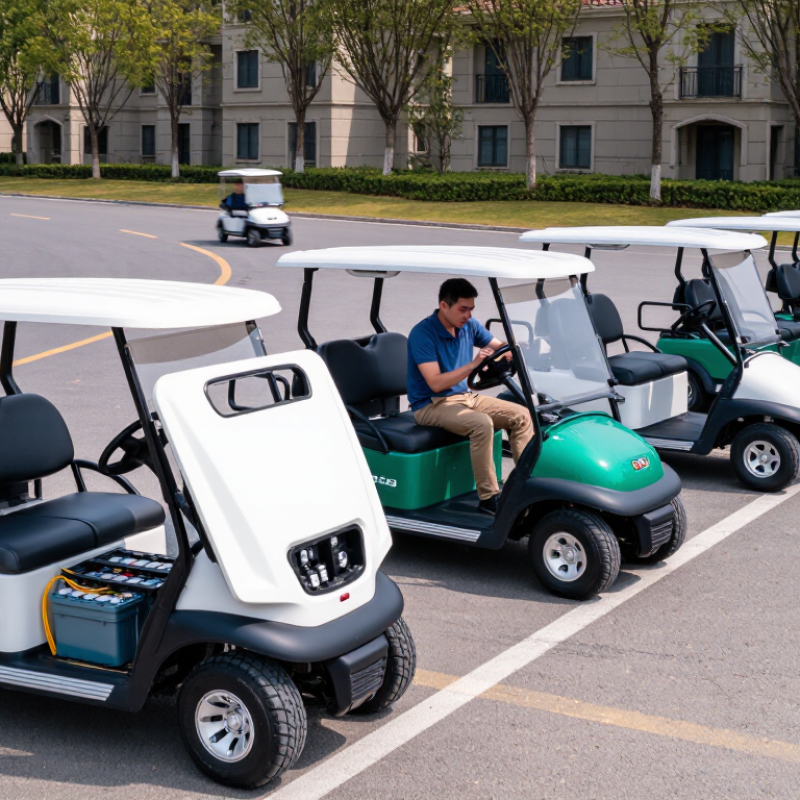
How to Find the Best Golf Carts for Sale?

Define Your Golf Cart Needs and Intended Use

Choosing the best golf cart for sale starts with an honest description of your daily needs. Will you use it on a private course, a large property, or short neighborhood trips? Count the passengers, tools, groceries, and equipment it must carry. A two-seat cart may feel practical until four people and a cooler need space. Measure your garage, gates, and storage area before shopping.

Terrain also matters. Flat paths require less power than steep hills, loose gravel, or wet grass. Electric carts usually offer quiet operation, while fuel-powered models may suit longer use without frequent charging. Check the battery age, charging equipment, tire condition, brakes, steering, and frame. A clean exterior can hide expensive wear. During a test drive, listen for grinding sounds and test stopping on a gentle slope. I once focused too much on appearance and overlooked weak braking. That mistake changed how I inspect used carts.

Tips: Write down your usual route, passenger count, load weight, and weekly driving hours. Compare those details with the cart’s published capacity. Ask for maintenance records when available. Confirm replacement-part availability and service support in your area. If you plan to use public roads, check local equipment and registration requirements. Leave room for imperfect days, too. Rain, heavier cargo, and unexpected hills can quickly expose an undersized cart.

How to Find the Best Golf Cart for Sale?

Define your golf cart needs and intended use before comparing models.

The chart uses a 1–5 planning priority scale, where 5 means the feature is essential for that use case. Golf courses typically prioritize terrain capability and passenger seating, while property maintenance places greater emphasis on cargo capacity. Neighborhood transportation generally requires stronger street-use equipment and adequate range.

Compare New, Used, and Refurbished Golf Cart Options

Choosing among new, used, and refurbished golf carts depends on budget, usage, and repair tolerance. A new cart offers the latest batteries, safety features, and warranty support. It usually costs more, but predictable ownership can matter for daily resort or community transport. Grand View Research estimated the global golf cart market at about $1.64 billion in 2023, with continued growth expected through 2030. Demand is expanding beyond golf courses.

Used carts can provide strong value, especially for short trips on private roads or large properties. Check the battery age, charging time, tire wear, frame corrosion, and steering response. A cart that looks polished may hide expensive battery replacement. The National Golf Foundation reported approximately 531 million U.S. golf rounds in 2023, supporting steady demand for practical course transportation. Still, golf-course use can create heavier wear than residential use. That detail is easy to miss.

Tips: Ask for service records. Test it uphill. Measure battery voltage before purchase. For refurbished carts, confirm which parts were replaced and whether testing was documented. Reconditioning quality varies widely. A fresh paint job is not mechanical proof. Compare the final price after batteries, delivery, charger upgrades, and repairs. Industry reports offer useful market direction, but local inspection remains more reliable. I would not choose the cheapest option automatically; a slightly older cart with honest records may be the safer purchase.

Evaluate Key Features, Performance, and Battery Types

Buying a golf cart starts with matching its features to your actual routine. A quiet neighborhood trip differs from hauling tools across uneven ground. Check seating, cargo capacity, ground clearance, lighting, mirrors, brakes, and weather protection. Do not trust a glossy specification sheet alone. Sit in the driver’s seat. Test whether controls feel natural and visible. I once overlooked storage space, and daily errands became awkward. That small mistake changed how I compare carts.

Performance depends on motor output, controller response, suspension, tires, and total load. Drive on a slope, over loose gravel, and through a tight turn if the seller permits it. Listen for rattles during acceleration. The ride should remain steady, not merely fast. Ask for braking distance and hill performance under realistic weight. A cart that feels powerful alone may struggle with passengers and equipment. Specifications help, but a hands-on test reveals more. Still, one short drive cannot predict every season.

Battery type deserves careful attention. Lead-acid batteries usually cost less initially, but they are heavier and need regular watering and cleaning. Lithium batteries are lighter, charge efficiently, and often provide more consistent power, though their purchase price can be higher. Compare usable range, charging time, replacement cost, warranty terms, and charger compatibility. Ask how the battery was stored and maintained. Request service records. “Nearly new” can mean very little. Leave room for charging access, temperature changes, and your own imperfect maintenance habits.

Inspect Condition, Safety, and Maintenance History

The lowest price can hide the highest repair bill. In a hands-on inspection, check the frame, roof supports, floorboard, and steering linkage. Look for fresh paint over cracks, weld discoloration, bent tie rods, and loose wheel studs. Check each tire’s age and sidewall condition. Uneven wear often signals alignment or suspension trouble. Start cold. Ask for a cold start, not a warmed-up demonstration. Listen for grinding, belt squeal, or delayed engagement. A short hill test can reveal weak power better than a showroom drive.

Safety deserves harder evidence. The U.S. Consumer Product Safety Commission’s National Electronic Injury Surveillance System has recorded annual estimates near 15,000 golf-cart-related emergency-room injuries in recent surveillance. That figure is not a buying formula, but it makes brakes, steering, seat belts, lights, and reverse alarms essential. Test stopping on level pavement. Inspect pedal travel and hydraulic leaks. Confirm the parking brake holds. For modified carts, verify the speed setting and tire rating. “It runs” is not a safety inspection.

Maintenance history should be specific. Seek dated records for battery replacement, charger testing, brake adjustment, tire changes, and electrical checks. Battery cases should be clean, secure, and free from swelling or acid residue. With lead-acid packs, measure each battery under load. One weak unit can drain the entire set. The Electric Power Research Institute notes that battery condition and charging practices strongly affect reliability in electric transport systems. Records still have limits. A neat folder can conceal neglect. If the seller refuses a cold inspection or independent technician, walk away.

Verify Pricing, Seller Reliability, and Ownership Costs

How to Find the Best Golf Carts for Sale?

A low sticker price can hide expensive repairs. Compare at least three listings with similar age, battery type, condition, and included equipment. The National Golf Foundation’s 2024 Golf Industry Facts report counted 28.1 million U.S. on-course golfers in 2023. That demand supports an active resale market, but pricing remains inconsistent. Market reports also use different definitions for “golf cart,” so headline market values deserve caution.

Ask the seller for the serial number, service records, battery test results, charger details, and ownership documents. A reliable seller should allow a cold start and an independent inspection. Check brake response, steering play, tire wear, frame corrosion, and battery age. Battery replacement may become the largest cost. Include insurance, registration where applicable, charging electricity, storage, transport, and routine servicing in your calculation. A cart priced several hundred dollars lower may be the poorer purchase. I have found that missing records do not prove a problem, but they should reduce your confidence and your offer.

Tips: Photograph the battery labels. Test it uphill. Request a written sales agreement. Compare the final delivered price, not just the advertised figure. Keep a repair reserve. Even careful buyers sometimes underestimate charger or suspension faults. That is worth admitting before purchase.

How to Find the Best Golf Carts for Sale? - Verify Pricing, Seller Reliability, and Ownership Costs
Golf Cart Type Typical Age Seats Power System Typical Asking Price Seller Reliability Indicators Inspection and Documentation Estimated Annual Running Cost Likely Major Replacement Cost Estimated Five-Year Ownership Cost Best Use Case
Used Personal Cart 8–12 years 2–4 Lead-acid electric $3,000–$6,000 Medium: verify ownership history, service records, and title status Battery load test, charger test, brake inspection, frame check, and proof of ownership $700–$1,200 $1,200–$2,000 for a battery set $6,500–$11,500 Short neighborhood trips and private properties
Refurbished Electric Cart 5–10 years 2–6 Lead-acid electric $5,500–$9,500 High when refurbishment work is itemized and supported by a written warranty Request parts receipts, battery date codes, frame photos, test-drive results, and warranty terms $800–$1,400 $1,200–$2,000 for batteries; $500–$1,500 for suspension or steering work $9,000–$15,000 Buyers seeking lower initial risk and improved appearance
New Entry-Level Electric Cart 0–2 years 2–4 Lead-acid or lithium-ion electric $8,000–$14,000 High if the seller provides a serial record, invoice, warranty, and clear delivery terms Confirm included equipment, battery warranty, maximum load, charging requirements, and registration documents $500–$1,000 $1,500–$4,000 for a future battery replacement $11,000–$19,000 Regular household use with predictable maintenance needs
Lithium-Ion Utility Cart 0–5 years 2–4 Lithium-ion electric $10,000–$18,000 High when battery capacity, charger compatibility, and warranty coverage are documented Check battery state of health, charging cycles, payload rating, controller operation, and service access $450–$900 $3,000–$6,000 for a lithium battery pack $12,500–$22,000 Frequent use, hauling, property maintenance, and longer daily routes
Used Gas-Powered Utility Cart 7–15 years 2–4 Gasoline engine $4,000–$9,000 Medium: inspect engine hours, maintenance history, emissions equipment, and fuel system condition Cold-start test, compression check, oil inspection, belt inspection, brake test, and frame examination $1,000–$1,800 $1,500–$3,500 for engine or transmission repairs $9,000–$16,000 Heavy-duty work where fast refueling and extended range matter
Six-Seat Transport Cart 2–8 years 6 Electric or gasoline $9,000–$20,000 Medium to high: verify passenger-rated equipment, structural condition, and local road-use requirements Check seat belts, handrails, tire load rating, braking distance, lights, mirrors, and registration eligibility $900–$1,800 $1,500–$5,000 for batteries, suspension, or drivetrain repairs $13,000–$27,000 Large properties, resorts, events, and passenger transportation
Auction or Private-Sale Cart 10–20 years 2–4 Electric or gasoline $1,500–$4,500 Low unless the seller permits inspection and provides verifiable ownership documents Inspect before bidding; verify title, serial number, battery age, charger condition, and outstanding liens $1,000–$2,500 $2,000–$6,000 for combined battery, drivetrain, and safety repairs $7,000–$15,000 Experienced buyers comfortable with repair and restoration work
Cost ranges are practical estimates in U.S. dollars and can vary by location, condition, battery technology, local registration rules, usage frequency, and required repairs. Always compare the purchase price with inspection results, warranty coverage, transportation fees, insurance, charging or fuel costs, and expected replacement parts.

FAQS

How should I define my golf cart needs before shopping?

Write down your usual route, passenger count, cargo weight, and weekly driving hours. A two-seat cart may feel sufficient until four people and a cooler arrive. Measure your garage, gates, and storage space. Real life is rarely tidy.

Which terrain should the cart handle?

Flat pavement requires less power than steep hills, loose gravel, or wet grass. Test the cart on a slope if possible. Carry realistic passengers and equipment during the test. A cart can feel strong when empty but struggle when loaded.

Should I choose an electric or fuel-powered cart?

Electric carts usually provide quieter operation and convenient charging. Fuel-powered carts may suit longer use without frequent charging. Compare your route length, charging access, storage conditions, and maintenance habits. Your routine matters more than general opinions.

What features should I inspect during a test drive?

Check seating, cargo space, ground clearance, lights, mirrors, brakes, and weather protection. Sit in the driver’s seat and test every control. Drive through a tight turn and over uneven ground. Listen for rattles, grinding, or delayed engagement.

How should I compare different battery types?

Lead-acid batteries usually cost less initially but are heavier and need regular watering. Lithium batteries are lighter and often provide more consistent power. Compare usable range, charging time, replacement cost, warranty terms, and charger compatibility. “Nearly new” can mean very little.

What signs may reveal expensive mechanical problems?

Inspect the frame, roof supports, floorboard, steering linkage, and wheel studs. Look for fresh paint covering cracks or unusual weld discoloration. Uneven tire wear may indicate alignment or suspension trouble. Start the cart cold, not after a warm-up demonstration.

Which safety checks should I complete before buying?

Test braking on level pavement and a gentle slope. Confirm the parking brake holds firmly. Inspect pedal travel, hydraulic lines, seat belts, lights, and reverse alarms. “It runs” is not a safety inspection.

How important are maintenance records?

Request dated records for battery replacement, charger testing, brake adjustment, tire changes, and electrical checks. Inspect battery cases for swelling, acid residue, or loose connections. For lead-acid packs, test each battery under load. One weak unit can drain the entire set.

When should I reject a used golf cart?

Walk away if the seller refuses a cold inspection or independent technician. Be cautious when records are missing or answers remain vague. A clean exterior can hide weak brakes or worn steering parts. I once trusted appearance too much. I regretted it.

Conclusion

Finding the right Golf Carts For Sale starts with clearly defining how and where you plan to use the vehicle. Consider whether you need it for a private course, neighborhood travel, property maintenance, or occasional recreation, then choose a suitable size, seating layout, and power system. Compare new, used, and refurbished options carefully, weighing purchase price, expected lifespan, warranty coverage, and potential repair needs. Electric and fuel-powered models may offer different advantages, so evaluate battery type, charging time, driving range, speed, and overall performance according to your priorities.

Before purchasing, inspect the cart’s frame, tires, brakes, steering, lights, seats, and safety equipment. Request maintenance records and check for signs of poor storage, corrosion, or previous damage. You should also compare total ownership costs, including batteries, charging equipment, insurance, maintenance, and registration requirements where applicable. Finally, research the seller’s reputation, confirm that the vehicle’s condition matches the listing, and review all purchase terms carefully. A thorough comparison can help you select a dependable cart that fits both your needs and budget.


Oliver

Oliver

Oliver is a seasoned marketing professional with a wealth of expertise in driving brand awareness and engagement. With a deep understanding of our company's product offerings, he consistently delivers high-quality content that enriches our professional blog. His insights not only shed light on......