Select production-grade, CE-certified mechanical assemblies designed to operate seamlessly under high-performance lifted configurations.
For over three decades, the Club Car DS platform (spanning production years from 1982 to 2013) has served as the backbone of personal transport, hospitality fleets, and industrial yard operations. As utility requirements transitioned from simple fairway navigation to rugged multi-terrain transit, the engineering demand for highly durable, robust lift systems grew exponentially.
A 6-inch lift kit is not merely an aesthetic modification; it represents a comprehensive structural reconfiguration of the vehicle's suspension geometry. When lifting a Club Car DS, the vehicle’s center of gravity shifts upward, necessitating meticulous counterbalancing design. Engineering standard lift kits require optimizing the roll center, caster angle, and camber settings to prevent high-speed instabilties and tire wear.
Historically, simple "spindle lift" adaptations sufficed for minor ground clearance. However, modern commercial demands dictate the utilization of Double A-Arm (Control Arm) systems. These advanced geometries decouple suspension travel from steering input, preventing the notorious "bump steer" effect and ensuring the cart's tires remain flat against the surface regardless of the terrain deviation. Today's global distributors seek systems that can support up to 23-inch off-road tires while preserving a factory-like ride quality.
As fleet managers and commercial vehicle suppliers worldwide adapt to green electrification, the retrofitting and upgrading of legacy platforms like the Club Car DS have skyrocketed. Purchasing agents evaluate lift kits based on verifiable material certs, supply chain scalability, and anti-corrosive performance.
Fleets at beachfront luxury retreats, nature reserves, and vast resort compounds require lifted utility vehicles to navigate sandy, unpaved paths quietly while transporting premium clientele and heavy luggage.
Industrial complexes, manufacturing plants, and airport ground service teams utilize heavy-duty lifted carts to traverse warehouse thresholds, debris-ridden railway yards, and uneven outdoor surfaces safely.
Large orchards, farming cooperatives, and vineyard operations source premium 6-inch lift packages to maximize ground clearances, mitigating damage from hidden boulders, irrigation lines, and crop roots.
For the purchasing department, sourcing directly from specialized OEMs is critical. Unbranded or generic aftermarket solutions often introduce metallurgical flaws—such as low-grade casting voids in spindles or non-compliant mild steel that shears under stress. Standardizing procurement on certified manufacturers guarantees that fleet modifications remain OSHA and ANSI Z535 compliant.
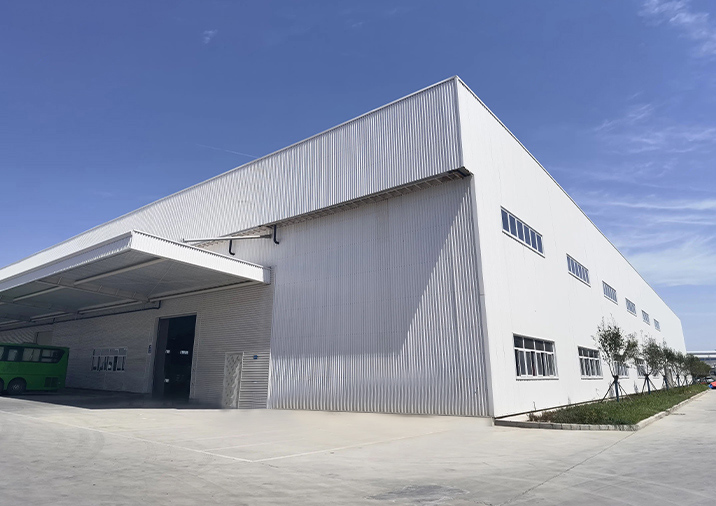
XXCART is a large and powerful manufacturer of electric golf carts and precision vehicle components which has obtained CE certification. By integrating the design advantages of industry giants like E-Z-GO, Club Car, and Yamaha, while adopting advanced production technologies, we have engineered proprietary vehicle platforms in accordance with the technical standards of imported electric utility vehicles.
With more than two decades of fabrication history, we control the tooling, design, and manufacturing workflows for the vast majority of our catalog. From chassis frames and heavy-duty double A-arm suspension nodes to high-tolerance replacement mechanical components, we maintain strict oversight to ensure consistent, premium-grade outputs.
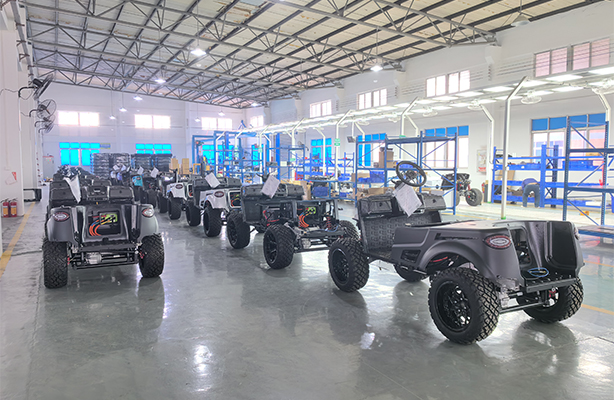
Industrial excellence is forged through automated precision. Our manufacturing footprint leverages IoT-enabled smart assembly stations, structural simulation testing, and robotic welding lines to produce flawless suspension components.
Our production floor employs multi-axis OTC robotic arm welders, delivering consistent, deep-penetration weld pools on DOM (Drawn Over Mandrel) structural carbon tubing to prevent failure at dynamic load joints.
To combat corrosion from coastal salt fog or acidic farm soils, all carbon steel components undergo multi-stage zinc phosphate pre-treatment, followed by thermosetting polyester powder baking (minimum 120-micron thickness).
Before physical prototype tooling, lift components are subjected to rigorous Finite Element Analysis (FEA). Computational simulations map out stress distribution under extreme 3G vertical shocks to ensure structural longevity.
Our localized proximity to raw high-grade iron ore processors, casting foundries, and surface-finishing plants allows XXCART to absorb supply chain volatility. With our streamlined logistics framework, we achieve constant raw material buffer levels, guaranteeing consistent lead times even under intense global demand spikes. This integrated supply chain reduces cost variance and speeds up delivery schedules to major ports like Shanghai and Ningbo.
Cover components and body shells are constructed from specialized PP automobile engineering polymers, offering lightweight flexibility, scratch resistance, and excellent long-term durability. Our chassis lift systems are equipped with unique operation designs, smooth steering configurations, and independent damping structures.
XXCART is committed to delivering highly durable, ecologically responsible, high-performance mechanical solutions that ensure maximum reliability under intense daily duty cycles.
Through technological refinement, automated quality control loops, and component testing, we support stable operations and product performance upgrades for global businesses.
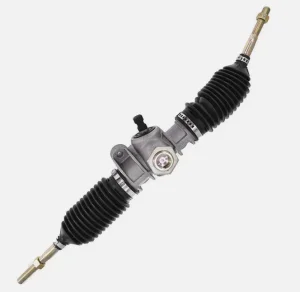
From leaf spring stiffness ratings and shock gas pressures to steering knuckle configurations, our engineering team modifies standard kits to align with your regional regulatory requirements.
A transparent breakdown of metallurgical properties, dimension expansions, and torque ratings for engineers and warehouse buyers.
| Engineering Parameter | Technical Specification Value | Industry Standard Compliance |
|---|---|---|
| Primary Material | SAE 1045 Structural Carbon Steel & Cast Spindles | ASTM A519 / ISO 6892-1 |
| Camber Adjustability | Dual Turnbuckle Design (-1.5° to +1.5°) | SAE J493 Compliance |
| Bushing Composition | High-Density Self-Lubricating Polyurethane (Graphite Filled) | Durometer Shore A 95 |
| Steering Geometry | Optimized Ackermann Steering Angle Retained | FMVSS Standard 500 equivalent |
| Maximum Wheel Tire Size | 23" x 10.5" - 12" (Offset required) | Off-Road Rim Clearance Guide |
| Tensile Strength (Sleeve Joints) | ≥ 510 MPa | GB/T 3091 Standard |
The golf cart industry is experiencing rapid evolution, influenced by new energy structures and automated drive systems. These factors reshape how suspension systems are developed.
With lead-acid batteries being systematically replaced by lightweight Lithium-ion packs, the weight distribution shifts significantly. Heavy golf carts are losing up to 300 lbs of central mass. Future 6-inch lift designs must adjust their spring rate kinetics. Rear multi-leaf springs are being re-engineered to be softer, while front setups are dampening rebound strokes more dynamically to prevent bounce over high obstacles.
Large industrial resorts now demand real-time telematics. Lift kit spindles and control arms are beginning to feature integrated sensor mounts for wheel-speed sensors and accelerometer brackets. This lets remote software monitor chassis vibrations, suspension damage, and rollover risks, enabling predictive maintenance schedules across the entire fleet.
Authoritative answers targeting critical technical inquiries from mechanics, buyers, and fleet managers.
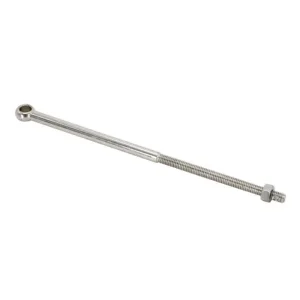
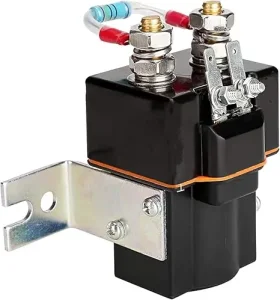
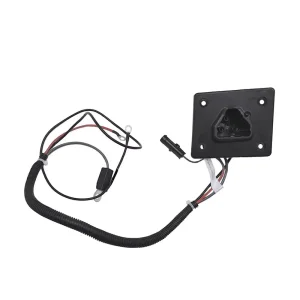
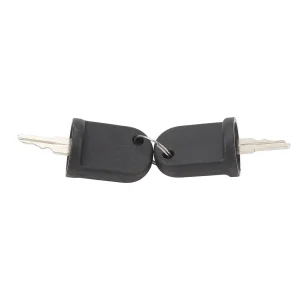
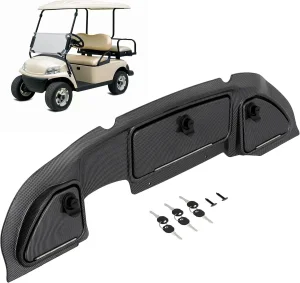
Secondary portfolio of high-demand OE replacements, electrical switches, solenoids, and key configurations needed to rebuild and optimize cart dynamics.
 XXCART