Best Ezgo Golf Cart Roof Manufacturers & Suppliers

A Comprehensive Engineering & Sourcing Guide for Global Fleet Procurement, Structural OEM/ODM Design, and Polymer Supply Chain Optimization

Company Profile

About XXCART INC

XXCART is a prominent and highly capable manufacturer of electric golf carts and specialized heavy-duty canopy components, holding comprehensive CE certification. We specialize in producing high-end customized vehicles and structural parts, integrating the engineering strengths of industry leaders like EZ-GO, Club Car, and Yamaha. By deploying advanced manufacturing systems and rigorous thermal forming and polymer extrusion technologies, we develop premium accessories that set new benchmarks for reliability, durability, and aesthetics.

21+
Years of Experience
100+
Countries & Regions
50k ㎡
Factory Area
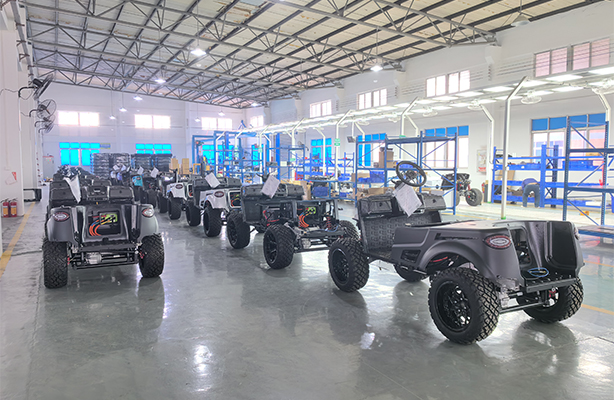
XXCART Advanced Manufacturing Facility

Customized OEM/ODM Structural Services

High-performance engineering materials for maximum mechanical strength and longevity.

Our external body elements and structural canopies are crafted using advanced engineering PP (Polypropylene) automotive materials and vacuum thermoformed high-impact ABS. These advanced polymers are explicitly engineered to resist extreme impacts, resist long-term UV degradation, and sustain consistent mechanical rigidity under high temperature variations.

Vehicles built using XXCART elements incorporate specialized operation configurations, agile steering response geometries, and independent front/rear suspension architectures designed to provide superior load distribution and stability in harsh outdoor terrains.

Technical Advantages of Our EZGO Roof Elements:

  • High Precision Tooling: Produced with tight tolerance molds ensuring seamless alignment with standard EZGO struts and supports.
  • Integrated Water Drainage Channels: Optimized structural contours designed to guide heavy rain off the vehicle canopy immediately.
  • Structural Ribbing: Internally reinforced structural cross-beams preventing deformation under heavy overhead loads.
  • Fade Resistance: High concentration UV inhibitors chemically blended into the raw polymer matrix.

XXCART Core Industrial Specializations

Why global fleet operators and international distributors choose our manufacturing output.

High Precision Engineering

XXCART adheres strictly to rigorous quality assurance protocols. We are committed to supplying international markets with high-precision components that match or exceed original OEM configurations in material thickness, fitment alignment, and load ratings.

Robust Material Longevity

Leveraging high-end compound resins and advanced structural rib designs, our roofs are resilient against high impacts, heavy winds, and dynamic pressure drops, promoting an extended physical lifecycle for commercial service vehicles.

Customized Configurations

Through robust OEM/ODM pipelines, we design, modify, and build custom injection molds tailored to client specifications. From custom dimensions to integrated solar channels, we scale output according to precise target parameters.

Deep-Dive B2B Whitepaper: Optimizing Ezgo Golf Cart Roof Supply Chains

An authoritative analysis of procurement dynamics, industrial molding, and technical compliance.

1. The Strategic Role of Chinese Factories in Global OEM Golf Cart Canopy Supply Chains

China's manufacturing ecosystem provides substantial structural advantages for industrial-grade golf cart components. For distributors and fleet operators looking for the best Ezgo golf cart roof manufacturers and suppliers, China offers unprecedented vertical integration. Factories based in regional manufacturing hubs have direct access to petrochemical plants producing premium ABS and PP raw materials. This geographical integration eliminates secondary logistics costs, permitting competitive pricing margins while preserving structural component integrity.

Furthermore, local tooling facilities possess advanced CAD/CAM capabilities that allow them to replicate OEM specifications with rapid turnaround. In comparison to regional Western suppliers, Chinese manufacturers like XXCART maintain high-capacity hydraulic injection presses (often exceeding 3,000-ton capacities). This tooling allows for the single-shot molding of oversized roof structures, which minimizes mechanical stress-points along the plastic matrix. The result is a highly reliable part that aligns perfectly with standard metal struts and avoids the warping typical of cheaper thermal forms.

2. Analyzing Macro Industry Development Trends (2025–2030)

The global low-speed vehicle (LSV) market is undergoing rapid evolution. We identify three major trends shaping the future of golf cart roofs and accessories manufacturing:

  • Solar Panel Integration: Future-proof golf cart roofs are transitioning from passive weather shields to active power generators. Modern roofs are designed with recessed cavities to accommodate thin-film photovoltaic (PV) cells, directly feeding electrical power into lithium-ion battery arrays.
  • Lightweight Structural Composite Materials: As manufacturers aim to extend the driving range of electric fleets, reducing overhead weight is crucial. Suppliers are increasingly blending lightweight EPDM elastomers with structural PP to lower weight while reinforcing impact resistance.
  • Circular Economy Compliance: Major corporate buyers now require recycled polymer blends. Industrial suppliers must balance the integration of post-consumer recycled plastic with virgin resins to ensure structural tensile strength is not compromised.

3. Localized Applications & Environmental Adaptation

A standard golf cart roof must be engineered for varying geographical challenges. A canopy deployed in a coastal Florida resort faces completely different degradation vectors than one used in an Arizona desert or a northern European industrial campus:

  • Coastal and Saline Environments: UV radiation and airborne sodium chloride accelerate plastic embrittlement. Premium canopies require high-load titanium dioxide (TiO2) UV-stabilizer packages within the polymer formulation to block radiation-induced cross-linking, which prevents yellowing and cracking.
  • High-Heat Desert Zones: Temperatures under direct sunlight can cause thermal expansion. Roofs must be designed with engineered relief gaps and flexible mounting grommets to allow the plastic canopy to expand and contract relative to the aluminum supporting struts without buckling.
  • Industrial and Academic Campuses: Fleet vehicles frequently encounter low-hanging tree limbs and structure overhangs. Impact-modified plastics containing thermoplastic olefins (TPOs) ensure that structural panels deflect impacts rather than cracking under mechanical shock.

4. Global Corporate Sourcing & Compliance Protocols

Procuring custom components at a global scale requires strict adherence to international quality standards. Buyers must verify that manufacturing partners have robust quality control pipelines:

  • CE Certification: Essential for European markets, proving that the vehicle assemblies and electronics comply with health, safety, and environmental protection regulations.
  • ISO 9001:2015 Standards: Ensures the factory operates under a documented quality management system with traceabilities on raw material batches.
  • ASTM Mechanical Testing: Sourcing managers should request certificates for ASTM D790 (flexural properties) and ASTM D256 (Izod impact strength) to verify the structural limits of the supplied roofs.

International Market Coverage & OEM Supply

Exporting high-performance components to demanding commercial buyers worldwide.

Our products are exported to and valued in key global markets, including the **United States, Italy, Canada, Belgium, Bulgaria, Ireland, Austria, Norway, Sweden, Denmark, Finland, France, Spain, Brazil, Mauritius, the Maldives, Thailand, and the Philippines**. Through close cooperation with our international customers, we share brand initiatives, co-develop custom parts, and offer flexible configuration strategies. We provide robust support throughout the procurement cycle—from pre-sale engineering layouts to after-sale technical assistance. In cases of complex installations, our engineers can be deployed on-site to assist in fleet upgrades.

By maintaining design control over tooling and fabrication, we consistently provide durable OEM-grade accessories for **Club Car, E-Z-GO, and Yamaha** at highly competitive price points. Our replacement parts are built to perform reliably in demanding commercial environments.

Global Shipping and Logistics Facility

Frequently Asked Questions (FAQ)

Technical answers to key procurement and engineering queries.

What are the primary differences between injection-molded PP and thermoformed ABS roofs?
Injection-molded Polypropylene (PP) provides superior flexibility and fatigue resistance, allowing the roof to flex and recover from impacts without cracking. Thermoformed ABS, while highly rigid and scratch-resistant, can be more brittle under sudden impacts. Injection molding also allows for complex structural features like integrated drainage and mounting bosses to be molded directly into the part, ensuring consistent fitment.
How do your roofs prevent UV degradation and color fading in coastal areas?
We integrate specialized UV stabilizers directly into the raw polymer resin before molding. These additives absorb harmful ultraviolet rays and dissipate them as low-grade heat, protecting the molecular chains of the plastic from breaking down. This process prevents the chalking, embrittlement, and color fading typical of standard plastics exposed to coastal sunlight.
Can XXCART design custom roofs for unique vehicle footprints?
Yes, our engineering department provides comprehensive OEM/ODM services. We can design custom injection molds based on client CAD drawings or physical dimensions. Our high-tonnage tooling facility allows us to manufacture custom-shaped roofs, integrated cargo carrier channels, and special solar panel mounts to your exact fleet requirements.
What are your standard quality control protocols before parts leave the factory?
Every batch of raw plastic material undergoes density and melt-flow testing. Once molded, parts are checked for dimensional accuracy using coordinate measuring machines (CMM) to ensure alignment with OEM mounting patterns. We also conduct regular drop-impact testing at low temperatures to verify structural integrity under extreme conditions.