Modern commercial turf vehicles require tires that offer a delicate balance: they must provide optimal traction across multiple surfaces while minimizing turf compaction and preserving fairways. In golf courses, resorts, and gated residential sectors, golf buggy tires (or tyres) are critical to maintaining vehicle stability, energy efficiency, and passenger comfort. This guide outlines the structural, material, and performance standards required by global procurement managers when vetting manufacturers.
A golf buggy tire is not merely a piece of molded rubber. It is an engineered assembly of elastomer compounds, reinforcement plies, and specific tread geometries. Unlike standard automotive tires optimized for high-speed asphalt driving, golf buggy tires operate at lower inflation pressures (typically 12 to 22 PSI) and must maintain a wide footprint. This uniform pressure distribution prevents turf destruction, a key metric closely monitored by course superintendents worldwide.
Most commercial golf buggy tires employ a 4-ply or 6-ply rating system. The ply rating indicates the tire's strength and capacity to handle load pressures under varied conditions without carcass deformation. Multi-layer nylon cords increase structural resistance against side-wall punctures.
From Classic Ribbed profiles designed for straight-line stability on golf greens to aggressive All-Terrain patterns suited for muddy resort grounds, tread geometry directly controls the coefficient of friction, reducing slippage and protecting turf integrity.
The formulation of natural rubber blended with specific synthetic polymers dictates the tire's wear index. High-quality compounds prevent premature hardening, offer ozone resistance for outdoor storage, and ensure the tire maintains a flexible contact patch.
China has solidified its position as the premier global manufacturing hub for low-speed vehicle parts, specifically golf cart components and buggy tires. Chinese manufacturing facilities combine vast supply chains with advanced vulcanization technologies to produce high-performance, cost-effective tire options.
Leading factories utilize automated compound mixers and laser-guided carcass building machines. This reduces human error in ply alignment, ensuring that each tire meets strict radial runout parameters. Through economies of scale, Chinese factories purchase raw materials such as premium natural rubber from Southeast Asia in bulk, passing down the cost savings to international buyers without compromising quality.
Furthermore, Chinese ODM services offer unmatched design customization. Whether a customer requires specialized non-marking white tires for indoor arenas or extra-durable multi-ply tires for rugged construction sites, local manufacturers can adapt formulations and molds rapidly. This operational agility is supported by strict ISO9001 quality management systems, guaranteeing consistent batches.
| Performance Metric | Standard Tire | Premium OEM Grade |
|---|---|---|
| Ply Rating | 2-Ply / 4-Ply | Heavy Duty 4-Ply / 6-Ply |
| Rubber Content | 25% - 35% | 42% - 48% (Natural Rubber) |
| Tread Depth | 6mm - 8mm | 9.5mm - 12mm |
| UV & Ozone Resistance | Standard | High-Grade Anti-Aging Compounds |
| Certifications | Basic | CE, DOT, REACH Compliant |
The low-speed vehicle (LSV) industry is undergoing rapid changes. The transition to electric drivetrains, the integration of heavier lithium-ion batteries, and stricter local environmental guidelines demand a new class of golf cart tires.
Modern electric golf carts, especially those modified with lithium-ion power packs, supply immediate torque to the rear wheels. Traditional tires can spin on slick turf, causing grass damage and accelerated tread wear. Manufacturers are adjusting tire carcass rigidity and using high-friction polymers to handle this instant power delivery.
Global regulations are steering factories toward green manufacturing. Top-tier golf cart tire suppliers are replacing aromatic oils with sustainable vegetable-based oils and recycled rubber compounds, satisfying strict European REACH standards without losing durability or performance.
Golf buggies are no longer restricted to manicured lawns. They operate on paved paths, gravel, and sandy trails. Modern fleets require hybrid tread patterns that balance turf protection with enough bite for gravel slopes, allowing operators to run a single tire profile across different surfaces.
Different operational environments demand distinct tire profiles. Using the wrong tire can degrade performance, increase rolling resistance, and drive up maintenance costs. Below are four common applications and their specific requirements:
Recommended Tread: Ribbed / Turf-Saver.
Designed to glide over golf greens with minimum surface friction. These tires distribute buggy weight evenly, preventing soil compaction and tire ruts that disrupt grass health.
Recommended Tread: Smooth or Tight-Knit Street Tread.
Prioritizes a smooth, quiet ride on concrete and paved pathways. A specialized non-marking rubber compound is critical here to prevent black scuff marks on decorative stone walkways.
Recommended Tread: Heavy-Duty All-Terrain (6-Ply).
For industrial complexes, construction zones, and utility fleets. These tires must carry heavy cargo loads over gravel, dirt, and debris without puncturing, requiring robust side-wall reinforcement.
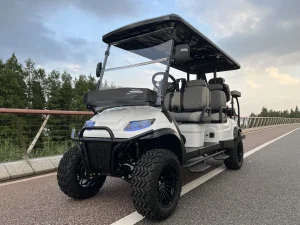
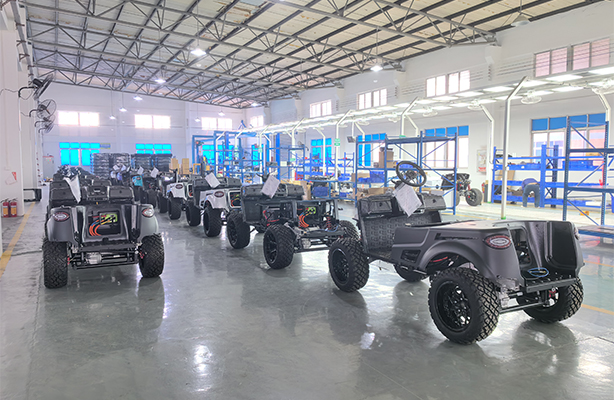
XXCART is a large and powerful manufacturer of electric golf carts and related components which has obtained CE certification. We focus on high-end customized vehicles and components, integrating engineering strengths from industry benchmarks such as EZ-GO, Club Car, and Yamaha. By adopting advanced technology, we design and manufacture our own vehicle series to match the technical standards of premium imported electric vehicles.
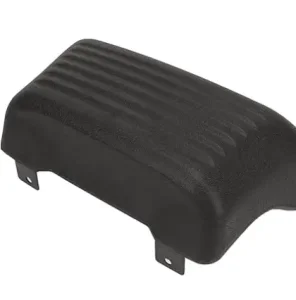
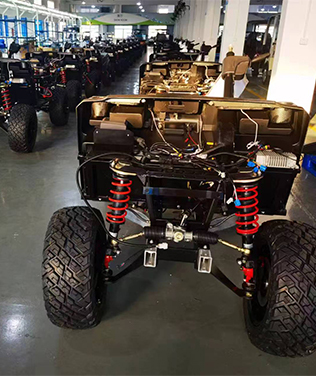
Our cover parts are constructed from a specialized PP automobile engineering material, selected for its modern finish, visual appeal, and long-term durability. XXCART vehicles feature responsive steering systems, custom drive controls, and independent suspension systems, delivering a smooth ride on different terrains.
We control the tooling and manufacturing operations for the majority of our components. This allows us to supply functional replacement parts that meet or exceed the performance of OEM specifications for Club Car, E-Z-GO, and Yamaha, all at competitive wholesale prices.
Send an Inquiry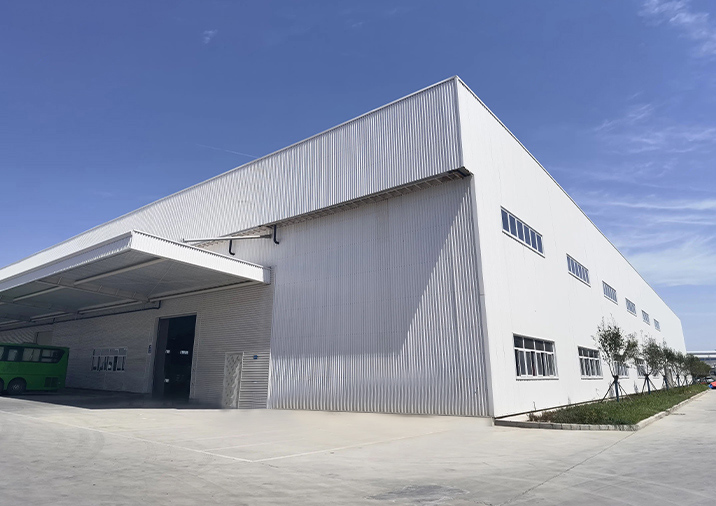
B2B procurement managers must look beyond unit price when sourcing golf cart tires and parts. Low-quality imports can lead to frequent downtime, liability issues from structural failures, and high replacement costs. A professional sourcing framework focuses on three main pillars:
Verify that the factory holds valid CE, DOT, and ISO9001 certifications. DOT compliance guarantees that tires meet highway safety guidelines (essential for road-legal LSVs), while CE and REACH compliance ensure environmental and safety standards are satisfied for European markets.
Reliable manufacturers provide material data sheets detailing the exact polymer blend used in production. A high natural rubber content (typically 40% or more) prevents dry rot, micro-cracking, and tread separation under hot climates or prolonged storage.
Large-scale operations require suppliers who can guarantee on-time shipping and stable pricing. Evaluating the factory's production capacity (such as XXCART’s 50,000㎡ facility) ensures they can scale production up during peak seasons without delaying shipments.
Get answers to common technical and logistical questions about golf buggy tires and global OEM sourcing.
The ply rating indicates the tire's load-carrying capacity and carcass strength. A 4-ply rated tire is ideal for standard fleet use on turf, offering a soft ride. A 6-ply rated tire features a stiffer carcass, making it better suited for heavy utility vehicles, industrial environments, and carrying heavy payloads without side-wall sagging.
Tires with high rolling resistance run down the battery faster. Choosing tires with a high natural rubber compound and an optimized tread design lowers rolling resistance, extending battery life per charge, which is highly beneficial for large rental fleets.
Standard tires contain carbon black, which can leave dark scuffs on concrete, tiles, and stone walkways. Non-marking tires replace carbon black with silica compounds, preventing marks on indoor floors and decorative pathways in hotels and resorts.
Under normal operating conditions and with proper tire rotation, premium tires last between 3 to 5 years. Lifespan depends on surface abrasive properties, load frequency, tire inflation maintenance, and exposure to intense sunlight or chemical treatments.
Quality control relies on automated chemical compounding, constant temperature vulcanization systems, and laser balance testing. Reliable manufacturers also conduct load-burst testing and aging simulations to ensure uniform performance across production runs.
 XXCART