Understanding the evolution of safety interfaces, material integrity, and regulatory trends in micro-mobility fleet operations.
The global golf cart market has experienced a significant paradigm shift over the past decade. No longer confined strictly to the fairways of recreational golf courses, modern utility terrain vehicles (UTVs) and low-speed vehicles (LSVs) have become essential components in commercial, resort, hospitality, industrial, and residential community logistics. This shift towards high-frequency, multi-terrain operational usage has exponentially heightened the demand for robust safety mechanisms. Among these structural protection components, the golf cart bumper stands as the first line of defense against low-speed impact energy, preserving both structural vehicle frames and ensuring passenger safety.
Modern golf cart bumpers are engineered structural components designed to absorb, dissipate, and redirect impact energy. As commercial operators scale up their fleets, the mechanical integrity of these components directly impacts operational downtime, insurance premiums, and total cost of ownership (TCO). In the event of minor collisions—frequent in dense resort properties, crowded manufacturing facilities, or heavy-use rental environments—a sub-standard bumper can lead to secondary structural damage, causing suspension misalignment, bodywork cracking, or worse, battery tray distortion in electric vehicles.
To meet the demands of global supply chains, modern industrial manufacturers must produce bumpers that reconcile two conflicting design parameters: high elasticity for low-energy collision recovery and rigid structural shear strength for catastrophic impact defense. Driven by regulations such as ANSI/ILSV standards and European CE machinery directives, the global commercial community is increasingly mandating that golf cart components undergo rigorous physical tests, environmental exposure evaluations, and high-precision quality control workflows.
Analyzing how specialized PP engineering plastics, PU overlays, and structural alloys deliver high impact resistance.
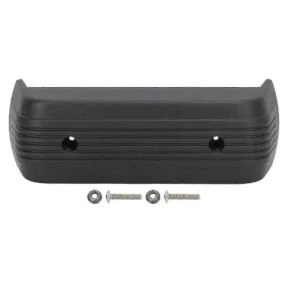
At XXCART INC, we approach bumper manufacturing through the lens of advanced polymer chemistry. The core cover components of our premium bumper range are synthesized from a specialized PP (Polypropylene) automobile engineering material. Standard off-the-shelf plastics lack the molecular resilience needed for outdoor machinery. Our proprietary PP formulations are reinforced with elastomeric modifiers and UV-stabilizers to withstand long-term solar radiation and high thermal cycling.
Compared to standard ABS or low-grade recycled plastics, our automobile-grade PP engineering material exhibits exceptional tensile strength, flexural modulus, and impact energy absorption metrics. This ensures that the bumper does not shatter upon impact, even in extreme sub-zero operating environments. Under low-speed contact, the bumper flexes, absorbs the mechanical load, and recovers its original geometry without showing stress-whitening lines or hairline structural fractures.
Why global B2B procurement professionals trust XXCART for their fleet and components supply chains.
We utilize state-of-the-art multi-axis CNC tooling machines and large-scale industrial injection molding presses to ensure micro-level tolerances. Every bumper precisely matches OEM chassis holes for quick installation.
Adhering to automotive crash safety benchmarks, our bumpers feature reinforced internal webbing structures. This design disperses energy outward toward heavy steel mounting brackets rather than localized chassis points.
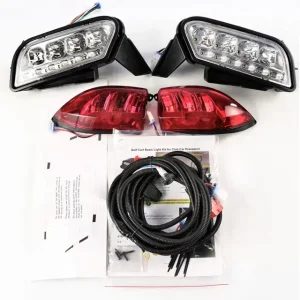
From custom color-matching to integrated LED lighting brackets, heavy-duty brush guards, or reinforced tow hitches, our engineering team works directly with corporate buyers to build custom bumper designs.
Leveraging domestic raw material integration, high-capacity tooling, and optimized logistics to maximize B2B procurement value.
One of the major competitive advantages XXCART offers is our geographic and systemic integration within China's industrial manufacturing ecosystem. As a leading player based in China, we control the entire lifecycle of our products, from initial tool design and mold fabrication to physical extrusion and final package assembly. Because we design and develop numerous parts and control the tooling operations internally for most items, we eliminate middle-man markups. This vertical integration guarantees that our global clients receive high-quality products at highly competitive price points.
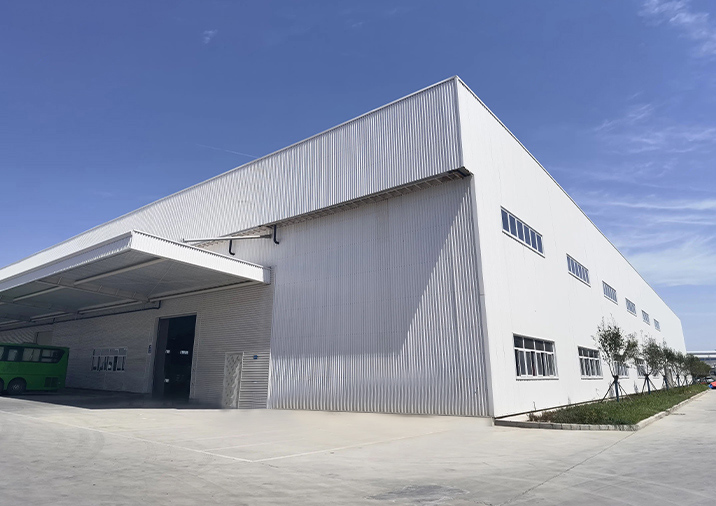
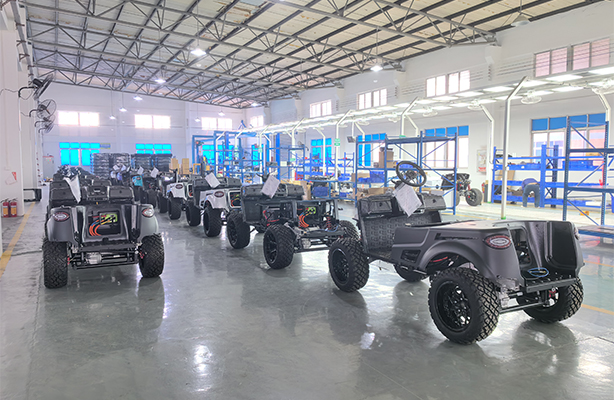
Our 50,000-square-meter modern manufacturing facility is engineered for lean operational throughput. Equipped with high-tonnage polymer injection molding machines, automated powder-coating lines, and robotic welding stations for structural steel bracket reinforcement, our factory operates with high efficiency and minimal waste. Our production capacity allows us to manage high-volume orders for global OEM distributors while concurrently running custom-batch runs for specialized fleet operations.
Furthermore, proximity to major international deep-water ports (such as Shanghai and Ningbo) minimizes logistical lead times and transport friction. By combining optimized manufacturing workflows, localized material sourcing, and efficient export handling, we deliver premium-grade replacement and OEM components that meet or exceed the performance specifications of domestic Western parts suppliers at a fraction of the cost.
Due to our unique style, excellent quality, and comprehensive service structure, XXCART has achieved widespread international market penetration. Our premium golf cart bumpers and specialized mechanical components are currently deployed across the USA, Canada, Italy, Belgium, Bulgaria, Ireland, Austria, Norway, Sweden, Denmark, Finland, France, Brazil, Mauritius, Maldives, Thailand, and the Philippines.
By collaborating with top-tier brand owners and distributors across these diverse regions, we share co-branding efforts, mutual technology advancements, and customize configurations matching regional market expectations.
Adapting bumper material properties to different environmental stress agents around the world.
Golf carts operate in highly diverse environments, each placing unique mechanical stress on external body components. For instance, coastal resorts in the Maldives or Florida expose vehicles to high salt-spray environments that quickly corrode standard mild steels. To mitigate this risk, XXCART’s bumper assemblies utilize anti-corrosive powder-coated mounting brackets paired with our rust-proof polymer bumpers.
Conversely, municipal and resort fleets operating in Scandinavian countries like Norway and Sweden must endure prolonged exposure to sub-zero temperatures. Typical plastics become brittle under cold stress and easily shatter on impact. Our special PP engineering material is specifically formulated with low-temperature impact modifiers, ensuring the bumper retains its elastic properties and structural integrity down to -30°C.
In heavy-duty industrial zones, such as manufacturing plants in the United States or Western Europe, bumpers frequently encounter chemical spills, grease, and acidic washes. The inert molecular structure of our polypropylene ensures that these chemical agents do not degrade the structural integrity or aesthetic finish of the bumper, keeping the vehicle presentable and operational for long periods.
As a primary source manufacturer, we design and develop numerous parts and control the tooling operations for most of our items. This localized ownership of the manufacturing pipeline ensures consistently high-quality products at competitive price structures.
Our major OEM replacement components cover the industry's most popular platforms, including Club Car, E-Z-GO, and Yamaha. At XXCART, we are proud to offer functional components that meet or exceed OEM specifications, delivering reliable alternatives to the global aftermarket.
A professional roadmap for corporate procurement officers and replacement parts distributors.
For commercial procurement managers, sourcing replacement parts and accessories globally presents challenges beyond unit pricing. Shipping delays, tariff barriers, quality fluctuations, and lack of technical support can lead to significant bottlenecks. XXCART addresses these challenges with a dedicated, professional B2B infrastructure.
To guarantee consistent material performance, our facility operates under ISO 9001:2015 quality management systems, and our primary assemblies carry full CE certification. We provide comprehensive tracking and trace records for raw materials, ensuring batch-to-batch consistency. Furthermore, our logistics team assists international buyers in optimizing container space, reducing ocean freight costs per unit.
Recognizing that post-purchase support is vital, we offer comprehensive engineering consultation services. If a fleet operator encounters challenges with large-scale vehicle conversions or mounting configurations, our engineers can step in to provide direct remote technical assistance, including customized design modifications or installation guides.
Answers to technical and commercial questions about manufacturing, compatibility, and ordering.
 XXCART