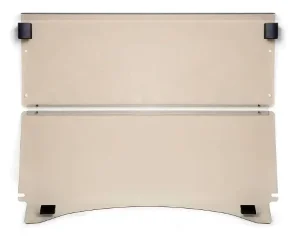
Discover our high-precision, safety-certified golf cart replacement parts engineered to match and exceed OEM performance. Secure your electrical systems with components built for durability.
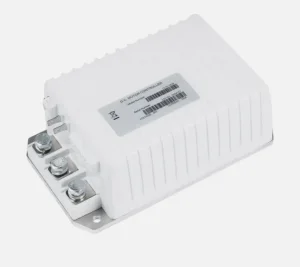
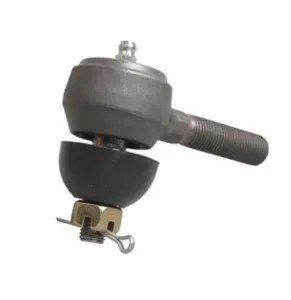
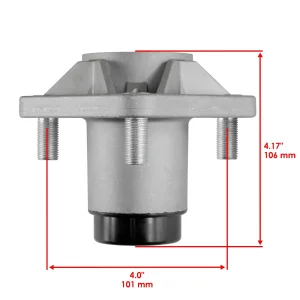
In the rapidly evolving world of Low-Speed Vehicles (LSVs) and personal transportation vehicles (PTVs), reliable electrical protection is paramount. A golf cart fuse serves as the essential failsafe device in the vehicle's electrical system, engineered to sacrifice itself during overcurrent anomalies or short-circuit events before catastrophic damage occurs to expensive components like the motor controller, batteries, or onboard charger.
Modern golf carts run on sophisticated high-amperage systems. A sudden spike in electrical current—whether triggered by dynamic acceleration loads, rugged terrain friction, or wiring deterioration—can result in devastating thermal events if left unchecked. Selecting fuses with exact tolerances, superior material integrity, and proven thermal dissipation characteristics is not merely a maintenance decision; it is a fundamental safety and risk mitigation policy for fleet operators and individual users alike.
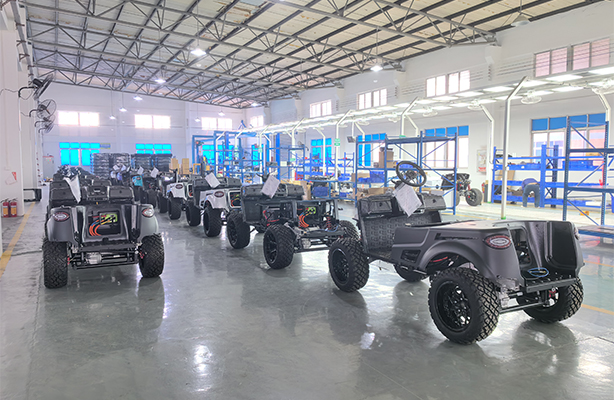
As the golf cart industry transitions from legacy flooded lead-acid battery configurations to high-performance Lithium-ion (LiFePO4) power cells, the technological requirements for circuit protection have grown exponentially. Today's procurement managers and design engineers must navigate several key shifts:
Lithium batteries feature extremely low internal resistance, creating the potential for massive short-circuit currents. Standard glass or plastic fuses may rupture violently during high-current events. Modern installations mandate ceramic-bodied, high-breaking-capacity fuses.
While 36-volt and 48-volt systems remain industry standards, performance and utility vehicles are rapidly adopting 72-volt to 96-volt platforms. Fuses must be rated to extinguish electrical arcs safely at these higher direct-current (DC) thresholds.
Golf carts are subjected to high vibration, heavy humidity, salt-spray near coastal golf resorts, and dynamic operating temperatures. The demand for IP-rated sealed fuse blocks and vibration-resistant element designs has intensified.
Industrial buyers, distributor representatives, and OEM product line directors must evaluate fuses based on precise electrical characteristics. Finding the right fuse relies on balancing maximum continuous operational load against emergency tripping thresholds.
| Fuse Type | Common Applications | Amperage Options | Typical Voltage Rating | Primary Compatibility |
|---|---|---|---|---|
| ANL Bolt-on Fuses | Main power feed, battery bank output, high-amp motor controllers | 100A – 400A | 32V / 48V / 80V DC | Club Car Precedent, EZGO RXV, Yamaha G29 |
| MIDI / AMI Compact Fuses | Secondary distribution, heavy-duty accessories, sub-assembly feeds | 30A – 150A | 32V / 58V DC | Universal customized platforms |
| MAXI Blade Fuses | Medium load protection, lighting systems, audio amplifier relays | 20A – 80A | 32V DC | Legacy EZGO TXT, Club Car DS models |
| ATO / ATC Blade Fuses | Standard auxiliary circuits, USB chargers, telemetry systems, horn | 2A – 40A | 32V DC | Multi-brand accessory fuse blocks |
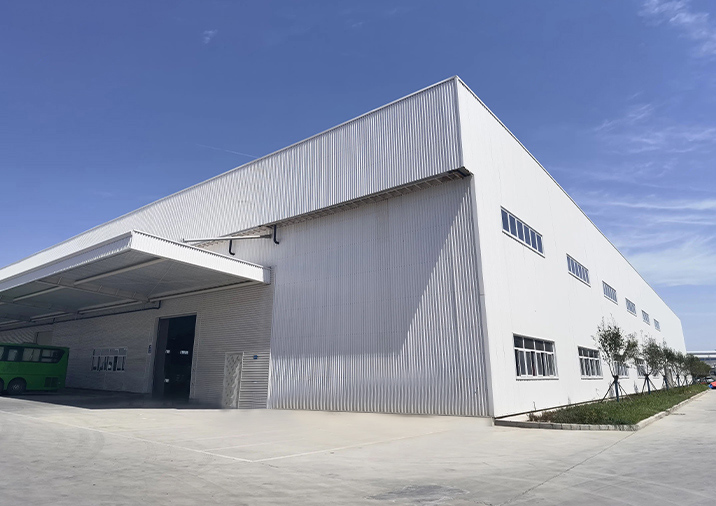
XXCART INC is a large, industry-leading developer and manufacturer of electric golf carts, specialized components, and advanced power distribution accessories. Adopting sophisticated production processes and engineering philosophies, XXCART integrates the proven design structures of industry standard systems (EZ-GO, Club Car, Yamaha) with in-house proprietary technology to engineer advanced solutions that meet the rigid technical standards of global markets.
Following our foundational operational mantra: "Quality first, Customer first", XXCART controls the tooling, injection molding, and assembly matrices for most of our catalog items. This vertical integration guarantees consistent component tolerances, reliable safety indexes, and highly competitive pricing models across both high-volume OEM orders and custom aftermarket replacements.
From our central manufacturing hub to our global partner networks, XXCART products are structured to offer structural durability and precision performance. Our major OEM-compatible product divisions cater to the highest industrial quality expectations:
XXCART adheres to strict quality assurance parameters, establishing full material traceability and structural testing protocols. We are committed to delivering high-performance, eco-friendly, and completely safe electrical products to operators worldwide.
By leveraging advanced polymers and alloy elements, our components withstand persistent thermal cycling, physical vibrations, and heavy mechanical impacts over decades of reliable service.
Our engineering team works alongside clients to design custom wire harness architectures, specific fuse box matrices, and custom-calibrated overcurrent protection profiles built for niche vehicles.
“We not only provide our customers good before-sale service but also good after-sale service. Even we can arrange engineers to solve technical issues directly at customer locations.”
Standing on the industry forefront allows us to see the farther needs of our partners. Through our dedication to high quality, aesthetic appeal, and dependable services, XXCART products have gained widespread recognition across high-compliance markets worldwide.
Our products are distributed across the USA, Canada, Italy, Belgium, Bulgaria, Ireland, Austria, Norway, Sweden, Denmark, Finland, France, Spain, Brazil, Mauritius, Maldives, Thailand, and the Philippines. We engage in collaborative research and shared brand partnerships to deliver customized solutions for diverse geographical requirements, tailoring configurations, colors, styles, and electrical profiles to local environments.
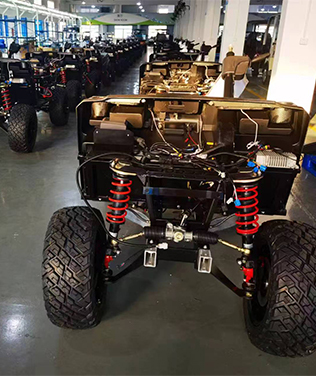
The golf cart and LSV industries are rapidly integrating digital network systems (CAN bus), telemetry, and smart energy hubs. This technological leap mandates a transformation in protection architectures from basic thermal-melt designs to intelligent protection modules.
By utilizing solid-state silicon switches and precise logic control circuits, electronic fuses detect subtle overcurrents in microseconds. Unlike classic fuses, e-fuses are software-programmable, resettable, and transmit real-time telemetry to the vehicle’s diagnostic computer.
Future cart platforms will move away from scattered fuse blocks in favor of compact, centralized IPDUs. These units house fuses, relays, voltage buck-regulators, and CAN interfaces in a single, IP67-rated moisture-resistant housing, reducing wiring complexity and potential failure points.
Review answers to common questions about golf cart fuses and electrical systems to support your maintenance and purchasing decisions.
A fuse blows when current exceeds its calibrated rating. Repeated failures suggest a chronic issue, such as a short circuit in the wiring harness, a malfunctioning motor controller, or excessive motor load from worn bearings. It is crucial to diagnose the root cause rather than installing a fuse with a higher amperage rating, which can lead to fires or melt critical wiring.
While they operate on similar electrical principles, manufacturers deploy different fuse housings. Club Car models frequently utilize inline blade fuses or main ANL terminal block fuses near the battery group. EZGO legacy systems commonly use standard ATO/ATC fuse blocks under the seat, and Yamaha often integrates multi-circuit modules. Ensure you check the manufacturer parts manual before ordering replacements.
Calculate the total wattage of the accessory (e.g., LED headlights, audio system), divide it by the system voltage (e.g., 12V), and add a 25% safety margin. For example, a 120W light bar on a 12V sub-system draws 10 Amps. Factoring in the safety headroom, a 12.5A or 15A fuse is ideal to prevent nuisance trips while ensuring wire protection.
No. ANL fuses are designed to handle high-current, high-draw circuits (often 100A to 400A) and feature bolt-on connections that prevent resistance build-up. Standard blade fuses are only rated up to 40A or 80A and lack the necessary physical contact area and breaking capacity (AIC) to handle main battery or controller lines safely.
Yes, we strongly recommend it. Lithium cells discharge current much faster than lead-acid batteries during a short circuit. Standard slow-blow or low-AIC fuses may fail to interrupt the current fast enough, resulting in battery damage or terminal arcing. High-rupturing-capacity (HRC) ceramic fuses, such as class T or special high-speed ANL models, are ideal for lithium-converted systems.
Browse our additional catalog of replacement parts, accelerator kits, and premium accessories, manufactured to meet the same high standards as our core electrical components.
 XXCART