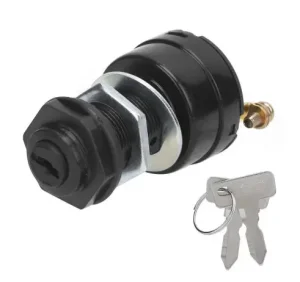
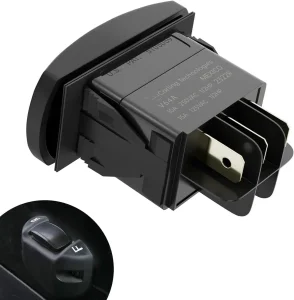
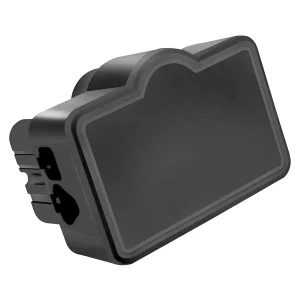
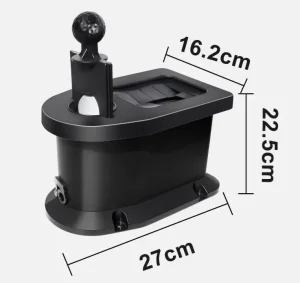
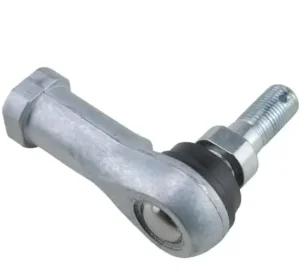
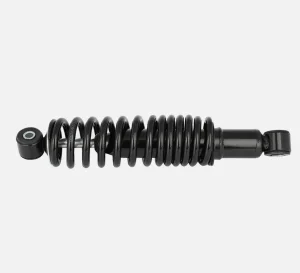
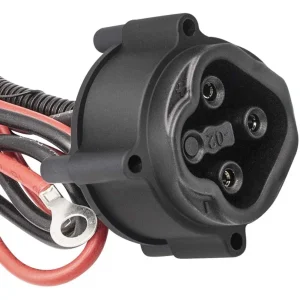
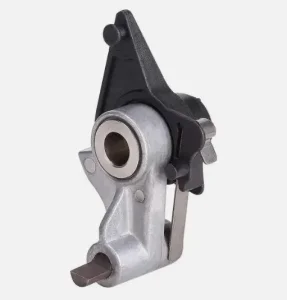
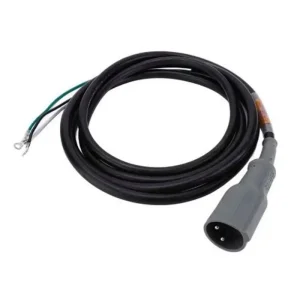
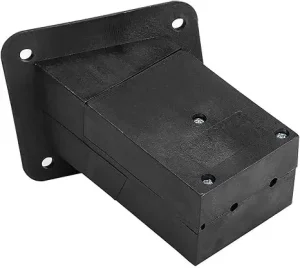
Explore our top-tier selection of OEM replacement parts, mechanical controllers, and electrical integration modules engineered for industry-leading vehicle brands.
Technological transformation from simple mechanical reduction gearboxes to smart, integrated, and highly efficient electric transaxles.
Modern electric transaxles are moving toward helical-cut gearing systems that minimize power dissipation. Precision-ground gears reduce friction losses to less than 4%, ensuring maximum battery range and thermal stability under continuous heavy loads.
Noise, Vibration, and Harshness (NVH) mitigation is a paramount design target. Today's resort and premium master-planned community fleets require transmission noise levels below 60 dBA. Achieving this demands ultra-tight manufacturing tolerances and automated sound-testing cells.
The industry is experiencing a profound shift away from detached components. Integrated packages combining the electric motor, electromagnetic brake, and transaxle into a single sealed unit reduce weight, eliminate alignment issues, and optimize cooling efficiency.
The transition from internal combustion engines to zero-emission powertrains has driven massive R&D investments into low-loss transaxles. In the past, golf cart transmissions were simple mechanical devices designed to link low-horsepower gas engines to rear wheels through basic belt CVT configurations. Today's electric drivetrains operate under high torque densities, drawing instantly on current from high-capacity lithium-ion battery packs. This requires a profound re-engineering of gear geometry, material metallurgy, and structural casings to prevent thermal fatigue and tooth wear.
Additionally, the integration of regenerative braking places bidirectional loading on the transmission gears. Where traditional gearboxes were designed primarily for forward propulsion loading, modern transaxles must withstand substantial reverse load stress during deceleration phases. Premium manufacturers utilize sophisticated computer-aided engineering (CAE) models to optimize tooth pressure angles and contact ratios, ensuring quiet and dependable operation for both acceleration and kinetic energy recapture phases.
Technical benchmarks, validation protocols, and materials science specifications required by commercial buyers.
Procurement teams from tier-1 OEMs and fleet management companies no longer source components based on unit cost alone. Total Cost of Ownership (TCO) calculation is the driving paradigm. A poorly sealed transaxle can cause catastrophic failures that lead to fleet-wide recalls and severe reputational damage. Consequently, sourcing executives require comprehensive testing documentation, including coordinate measuring machine (CMM) data, surface roughness profile measurements (typically requiring Ra < 0.4 μm for gear teeth), and detailed spectrographic analysis of the steel chemical composition.
Furthermore, global regulatory compliance is highly critical. Transmissions destined for use in the European Union must strictly align with RoHS and CE standards, guaranteeing that no restricted hazardous materials are used during the assembly or coating phases. In North America, structural components must be stress-tested to meet ANSI/ILTVA Z130.1 safety standards for golf cars, requiring rigorous destructive validation procedures on housing load points and mounting structures.
How domestic manufacturing hubs integrate precision tooling, automation, and logistical clusters to secure global supply chains.
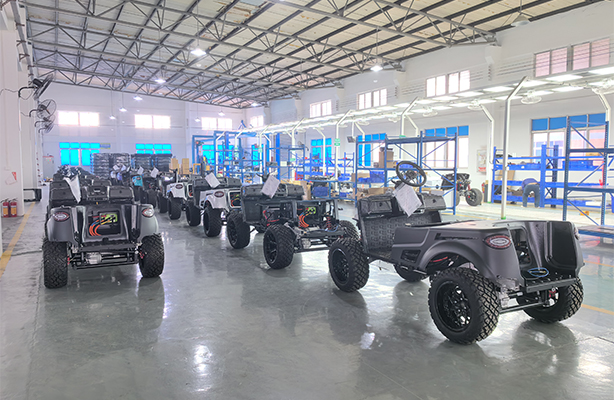
Modern plants utilize automated CNC machining centers, automated robotic welding stations, and specialized gear grinding systems to ensure high quality, eliminating the human error component in tight tolerance parts.
From aluminum foundry die-casting to final bench testing, having the entire process under one roof minimizes lead times, streamlines raw material quality control, and offers substantial cost benefits.
Positioned near key global shipping corridors, plants coordinate with logistics networks to execute just-in-time (JIT) deliveries, minimizing warehousing overhead for international buyers.
The strength of China's transmission manufacturing clusters lies in the dense ecosystem of specialized sub-tier suppliers. Within a 50-kilometer radius of major manufacturing hubs, factories can source high-grade alloy ingots, specialized heat treatment services, customized rubber seals, and advanced packaging materials. This dense supply network reduces internal logistics costs and allows factories to adapt production capacity rapidly when demand changes. If a global customer needs to scale up from 1,000 units to 10,000 units monthly, the supply chain can adjust within weeks, whereas Western counterparts might require months to secure raw castings.
Additionally, the adoption of Industry 4.0 practices has digitized the shop floor. Computerized manufacturing execution systems (MES) track each transaxle housing casting back to its original alloy batch. Every critical fastening operation is completed using torque-calibrated, internet-connected electric tools, recording the assembly torque signature for every unit. This digital twin data provides high transparency, allowing overseas customers to verify quality parameters online before the container leaves the port.
Pioneering customizable golf cart production and drivetrain engineering excellence for international markets.
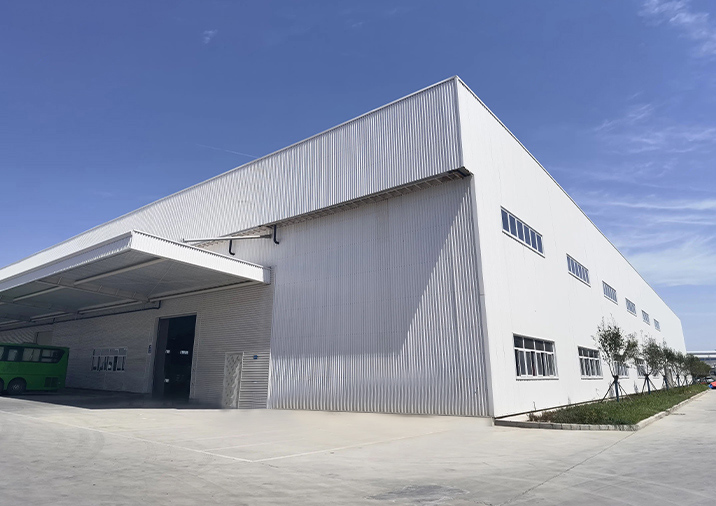
XXCART INC is a large and powerful manufacturer of electric golf carts and related components which has obtained CE certification. We mainly make high-end customized golf carts, integrating the design and engineering advantages of global leaders such as E-Z-GO, Club Car, and Yamaha. Meanwhile, by adopting advanced technology, we have researched and developed our own proprietary car series designed in accordance with the technical standards of premium imported electric cars.
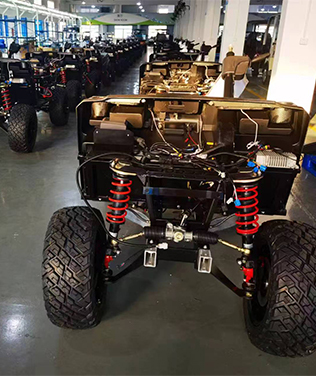
Our cover parts are made out of special PP automobile engineering material, which is featured with fashion, beauty, and great durability. These cars are equipped with unique and individual operation systems, agile and smooth steering systems, and independent suspension systems.
"We not only provide our customers good before-sale service but also good after-sale service. Even we can arrange engineers to solve the problems for customers. Following the basic concept of 'Quality first, Customer first'."
Standing on the mountain peak, we can see the farther world. Due to unique style, excellent quality, and perfect service, we have been approved by clients and markets to the maximum extent. Our vehicles and components are trusted across the USA, Italy, Canada, Belgium, Bulgaria, Ireland, Austria, Norway, Sweden, Denmark, Finland, France, Spain, Brazil, Mauritius, Maldives, Thailand, and the Philippines.
We work in close cooperation with international partners to share brands and develop new products together. We are able to meet the varied demands of different customers by adopting configurations of colors, styles, and advanced mechanical options.
Get authoritative answers to technical engineering and procurement questions about golf cart transmissions.
In traditional vehicles, the transmission and axle are separate units. However, in golf carts and light utility vehicles, they are integrated into a single mechanical component called a transaxle. The transaxle combines the gear reduction system, the differential, and the axle shafts into one housing. This saves space, reduces weight, and is highly efficient for electric motor coupling.
The gear ratio determines the trade-off between top speed and torque. A standard passenger golf cart typically uses a ratio of 10.35:1 or 12.44:1, allowing speeds up to 20-25 mph on flat terrain. For rugged, off-road, or cargo utility vehicles, a higher ratio such as 16.9:1 is selected. This increases mechanical torque multiplication, enabling the vehicle to climb steep slopes and carry heavy loads, though it limits top speed.
Unlike gas-powered vehicles, electric vehicles have silent powertrains. Any gear whine, vibration, or mesh noise from the transaxle is immediately audible and distracting to passengers. To achieve a premium user experience, factories must keep transaxle noise levels under 60 dBA by using high-precision helical gears, maintaining tight clearances, and using sound-absorbing lubricant formulas.
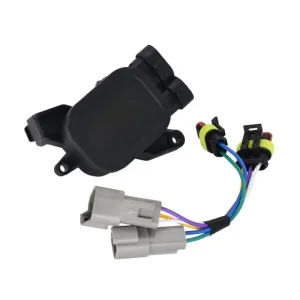
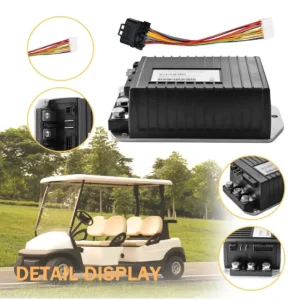
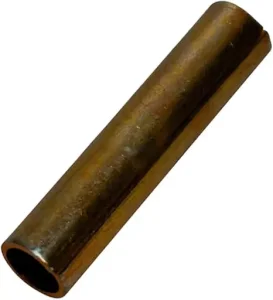
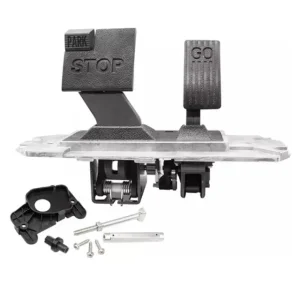
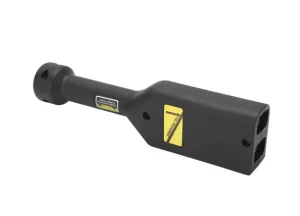
Yes. XXCART specializes in designing and manufacturing high-precision parts that meet or exceed original equipment manufacturer (OEM) specifications. Our components are fully compatible with major brands, including Club Car, E-Z-GO, and Yamaha. We manufacture critical parts like MCOR potentiometers, forward/reverse switches, suspension bushings, and chargers to align with OEM mounting points and spline configurations.
We combine advanced engineering software with computerized production systems. The tooling for our components is strictly controlled in-house. We run automated gear testing, dynamic balance tests, and dimensional audits to ensure every transaxle and mechanical component runs reliably. This allows us to provide long-lasting products at competitive prices.
Maintain operational efficiency with our selection of chargers, electrical plugs, shock absorbers, and steering linkages.
 XXCART