In the rapidly expanding market of low-speed electric vehicles (LSVs) and utility fleets, the windshield serves not merely as a wind deflector but as a critical component in vehicle aerodynamics, occupant safety, structural integrity, and regulatory compliance. Across golf courses, high-end gated communities, airports, large-scale industrial complexes, and eco-resorts, the request for rugged, certified components is at an all-time high.
The Club Car DS model remains one of the most enduring platforms in utility transport history. As fleet operators transition to modern safety configurations, retrofitting and manufacturing high-performance windshields that carry the CE Certification badge has transitioned from an option to an absolute legal and commercial necessity. The global demand for these components spans continents, with critical supply lines extending into North America, Europe, Latin America, and the Asia-Pacific region.
For enterprise buyers, sourcing from certified manufacturing operations ensures the mitigation of operational liabilities. Low-quality, uncertified plastics suffer from rapid solar degradation, high scratch rates, optical distortion, and structural cracking under thermal stress. Standardizing on CE-certified polycarbonate and modified acrylic formulations protects assets, reduces maintenance frequencies, and ensures safety under varied operation cycles.
"Enterprise scale calls for components that meet strict performance matrices. Sourcing windshields that satisfy European CE directives guarantees to global fleet operators that the safety, environmental, and health protection standards are verified throughout the manufacturing process."
Modern windshield engineering for the Club Car DS platform focuses on optimizing optical clarity, impact resistance, and weight distribution. Original equipment manufacturers must choose between distinct raw material configurations to match specific operational environment demands:
| Technical Characteristic | Standard Acrylic (Unmodified) | High-Impact Modified PMMA | CE Certified Hard-Coated Polycarbonate |
|---|---|---|---|
| Impact Strength (Izod) | 0.4 ft-lbs/in | 2.1 ft-lbs/in | 16.0 ft-lbs/in |
| Light Transmittance (%) | 92% | 90% - 91% | 88% - 89% (coated) |
| UV Yellowing Index (5 Years) | < 1.5 | < 2.5 | < 3.0 |
| Scratch Resistance (Taber Abrasion) | High Wear Rate | Moderate Resistance | Excellent (<2% haze after 100 cycles) |
| Operating Temperature Range | -30°C to +70°C | -35°C to +80°C | -40°C to +120°C |
Manufacturing precise windshield assemblies for the Club Car DS requires state-of-the-art optical-grade processing. XXCART employs precision CNC routing beds that eliminate micro-cracking along cut lines—a common point of failure for lower-grade windshields. The thermal forming process operates under closed-loop control to avoid optical distortion at the fold line of folding (tinted/clear) split-windshield models. Polyurethane-based living hinges are then thermally fused or high-shear riveted to maintain flexibility over thousands of cycles.
XXCART INC is a dominant player in the global engineering and manufacturing of electric golf carts and specialized parts. Integrating the mechanical advantages and designs of EZ-GO, Club Car, and Yamaha with proprietary technological advancements, XXCART research, tests, and manufactures parts that meet and exceed imported vehicle criteria.
The company's primary focus revolves around customized OEM/ODM vehicle development and structural replacement parts. Through the utilization of premium PP automobile engineering material for body parts and optical-grade polycarbonate for windshield assemblies, XXCART guarantees outstanding vehicle durability and operator safety.
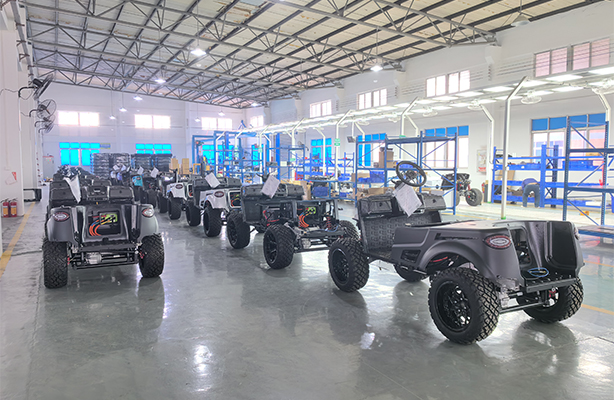
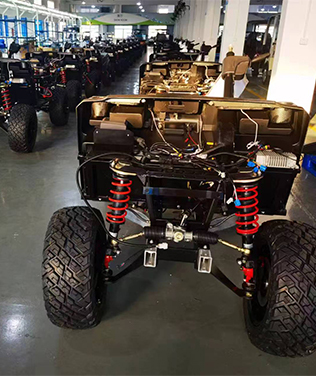
Our manufacturing operations are built upon high-precision tooling systems, independent suspension integrations, and smooth-steering dynamics that optimize the riding experience while maintaining maximum structural safety.
Request Technical Consultation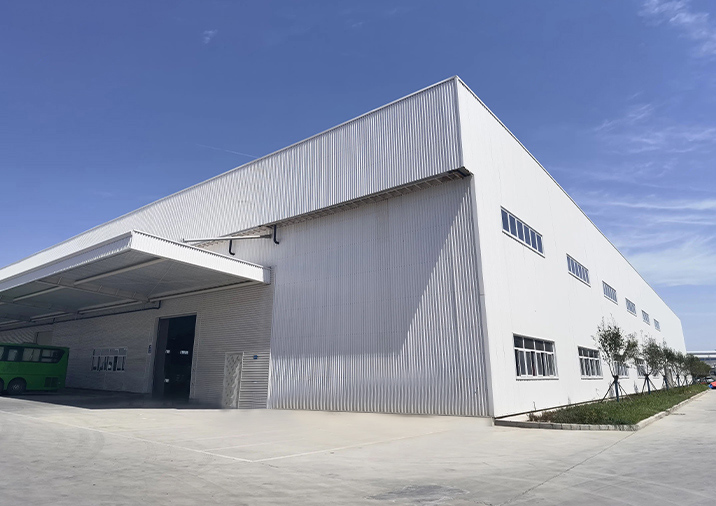
Procurement processes at an enterprise scale require thorough vetting of supply chain capacity, manufacturing precision, and shipping compliance. Fleet distributors and OEM assemblers require components that slide seamlessly into existing assembly loops or repair protocols.
Windshields must conform to Club Car DS strut geometry with tolerance limits within +/- 0.5mm. This guarantees vibration-free mounting and prevents stress points that cause micro-fractures during operation over rough golf courses or construction yards.
Prolonged exposure to solar radiation degrades standard polymers, producing cloudiness and structural brittleness. Enterprise buyers require high-density UV absorbers integrated into the base chemical structure of the material.
For folding split-windshields, the hinge is the most common point of failure. Specifying UV-stabilized polyurethane continuous hinges that undergo rigorous cycling testing ensures longevity over multiple seasons.
XXCART addresses these variables through rigorous product testing. From high-speed vibration simulations to accelerated chemical exposure tests, every batch of windshields leaving our factory is logged under strict quality control standards. This comprehensive tracking system allows us to support major commercial fleets, international distributors, and private golf operations with verified parts that minimize vehicle downtime.
As low-speed vehicles become more integrated with IoT architectures, the mechanical parts of the vehicle must adapt to meet digital demands. Traditional windshields are transforming into multi-functional platforms.
The integration of digital heads-up displays (HUDs), route mapping sensors, and dynamic solar collection interfaces is driving the next wave of windshield innovation. At XXCART, our engineering department is actively developing co-extruded windshield options that integrate micro-wire heating channels to prevent fogging in cold-climate resorts and industrial cold storage depots.
Additionally, we are exploring electrochromic polymer layers. This will allow cart operators to dynamically adjust the tint levels of the windshield at the press of a button or automatically based on ambient light sensors, optimizing vision and comfort during day-to-night transitions.
Global environmental mandates are placing pressure on manufacturers to lower their carbon footprint. The future roadmap of XXCART includes the integration of bio-based plastics derived from agricultural waste rather than petrochemical sources. This transition to bio-polycarbonate preserves clarity and tensile strength parameters while drastically reducing greenhouse gas emissions during the raw manufacturing phase.
Entering international markets like the European Union requires absolute alignment with European Directives. Under CE marking guidelines, manufacturers must show that components satisfy structural and environmental safety laws. Golf cart windshields classified under low-speed vehicle regulations are subjected to rigorous material stress, optical deflection, and fire retardation testing.
Our international market success across the USA, Italy, Canada, Belgium, Bulgaria, Ireland, Austria, Norway, Sweden, Denmark, Finland, France, Spain, Brazil, Mauritius, Maldives, Thailand, and the Philippines is built upon compliance verification. XXCART provides comprehensive product dossier files containing materials certificates, stress-loading graphs, and chemical stability data sheets.
Whether the deployment requires custom mounting brackets to accommodate specialized police lighting, integrated audio modules, or reinforced support structural framing for extreme duty, our factory team designs and controls tooling operations in-house. This gives XXCART the agility to produce bespoke designs that outperform standard aftermarket components.
We supply parts that match or exceed OEM parameters, guaranteeing perfect mechanical compatibility with Club Car, E-Z-GO, and Yamaha systems. Our global support framework facilitates field service engineer deployments to help massive commercial fleet operators debug assembly, mounting, and structural integration problems.
CE Certification shows that the windshield complies with strict EU safety, health, and environmental standards. It verifies that the chemical composition is safe, the optical properties prevent driving hazards, and the material will not shatter dangerously in an impact, making it suitable for municipal and resort operations.
Standard acrylic is highly cost-effective and resistant to sunlight yellowing but can shatter under high-speed impacts. Polycarbonate provides extreme impact strength (practically unbreakable), making it ideal for industrial, military, or heavy utility use, though it requires specialized hard coatings to achieve the same scratch resistance as glass.
We utilize precise multi-axis CNC routing systems and automated tooling molds designed directly from original Club Car DS specifications. This ensures every windshield retains a dimensional accuracy within +/- 0.5mm, eliminating structural noise and stress-related cracking at mounting points.
Yes, XXCART offers standard clear, light smoke tint (15% tint), and dark smoke tint (30% tint) configurations. Custom light transmission profiles and gradients can be calculated and developed to match specific regional solar requirements and fleet design schemes.
Our continuous hinges are manufactured from premium UV-stabilized elastomer polyurethane. Under testing, they endure over 15,000 fold operations without failure. This translates to more than 7 to 10 years of reliable service under normal operational guidelines.
Our polycarbonate windshields are treated with an advanced chemical hardcoat that resists damage from gasoline, common automotive fluids, industrial detergents, and atmospheric acid rain. Regular cleaning requires only mild soap and warm water to maintain optical clarity.
For standardized Club Car DS models, standard production batches can be prepared and dispatched within 15–20 business days. Large custom OEM/ODM orders requiring dedicated tooling modifications typically require 35–45 days from engineering sign-off to final container loading.
Yes, our logistics division coordinates container dispatch, custom declarations, and shipping documents for import ports in Europe, the Americas, and Australasia. This guarantees frictionless customs clearance and eliminates unexpected port charges.
 XXCART